Allies of World War II
Videos
The Allies, or Allied powers, formally referred to as the United Nations from 1942, were an international military coalition formed during World War II to oppose the Axis powers. Its principal members
UN Fight for Freedom Leslie Ragan 1943 poster restoration 1


"Long live the victory of the Anglo-Soviet-American military alliance!" – USSR stamp of 1943, quoting Stalin

An Allied propaganda poster of a US, a Chinese, and a British soldier lining up in front of their national flags.

Wartime poster for the United Nations, created in 1941 by the U.S. Office of War Information
World War II
Videos
World War II, or the Second World War, was a global conflict between two coalitions: the Allies and the Axis powers. Nearly all of the world's countries participated, with many engaging in total war o
Allies of World War II
…The Allies, or Allied powers, formally referred to as the United Nations from 1942, were an international military coalition formed during World War II (1939–1945) to oppose the Axis powers. Its principal members were the "Big Four"—the United Kingdom, the Soviet Union, the United States, and China…


Bundesarchiv Bild 101I 646 5188 17, Flugzeuge Junkers Ju 87

Matilda tanks on the move outside the perimeter of Tobruk, Libya, 18 November 1941. E6600
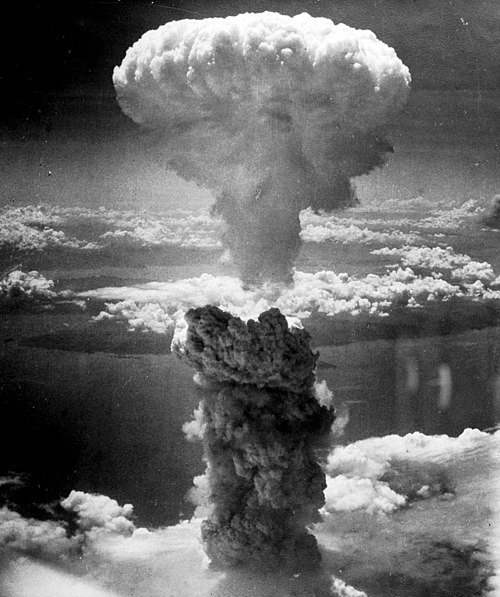
Nagasakibomb

Bundesarchiv Bild 183 R76619, Russland, Kesselschlacht Stalingrad