Alpheus (deity)
Videos
Alpheus or Alpheios, was in Greek mythology a river and river god.

A tetradrachm of Gelon, tyrant of Syracuse, minted c. 485 BC. The obverse depicts Alpheus, referring to the foundation myth of Syracuse.
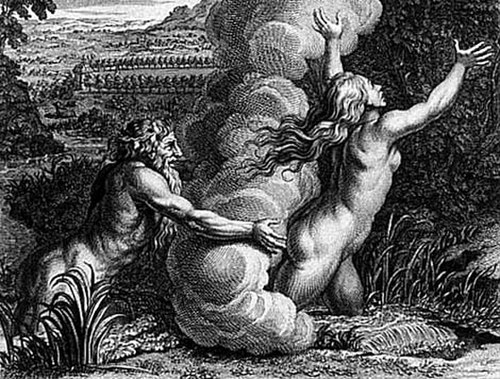
An engraving by Bernard Picart depicting a scene from Ovid's Metamorphoses in which Alpheus attempts to capture the nymph Arethusa.

Alpheus chasing Arethusa by Antoine Coypel (18th-century)

Alpheus and Arethusa by René-Antoine Houasse
Poseidon
Videos
Poseidon is one of the Twelve Olympians in ancient Greek religion and mythology, presiding over the sea, storms, earthquakes and horses. He was the protector of seafarers and the guardian of many Hellenic cities and colonies. In pre-Olympian Bronze Age Greece, Poseidon was venerated as a chief deity at Pylos and Thebes, with the cult title "earth shaker"; in the myths of isolated Arcadia, he is related to Demeter and Persephone and was venerated as a horse, and as a god of the waters. Poseidon maintained both associations among most Greeks: he was regarded as the tamer or father of horses, who, with a strike of his trident, created springs. His Roman equivalent is Neptune.


Poseidon greeting Theseus (on the right). Detail, Attic red-figured calyx-krater by Syriscos Painter, 450-500BC from Agrigento. BnF Museum (Cabinet des médailles), Paris

Poseidon pursuing a woman, probably by Achilleus painter, 480-450BC. Metropolitan Museum of Art, Manhattan NY

Statue of Poseidon in Germany by Johann David Räntz and Lorenz Wilhelm Räntz (1760).