Alternative rock
Videos
Alternative rock is a category of rock music that evolved from the independent music underground of the 1970s. Alternative rock acts achieved mainstream success in the 1990s with the likes of the grun

R.E.M., one of the first alternative rock bands, relied on college-radio airplay, constant touring, and a grassroots fanbase to break into the mainstream.

Kim Gordon and Thurston Moore of Sonic Youth performing in July 2005

Robert Smith of the Cure performing in June 2004

Nirvana's Kurt Cobain (right) and Krist Novoselic (left) performing at the MTV Video Music Awards in 1992
Grunge
Videos
Grunge is an alternative rock genre and subculture that emerged during the mid-1980s in the U.S. state of Washington, particularly in Seattle and Olympia, and other nearby cities. Grunge fuses element
Alternative rock
…that evolved from the independent music underground of the 1970s. Alternative rock acts achieved mainstream success in the 1990s with the likes of the grunge subgenre in the United States, and the Britpop and shoegaze subgenres in the United Kingdom and Ireland. During this period, many record labels were…

Mark Arm of Green River whose Dry as a Bone EP was described as "ultra-loose grunge" in 1987
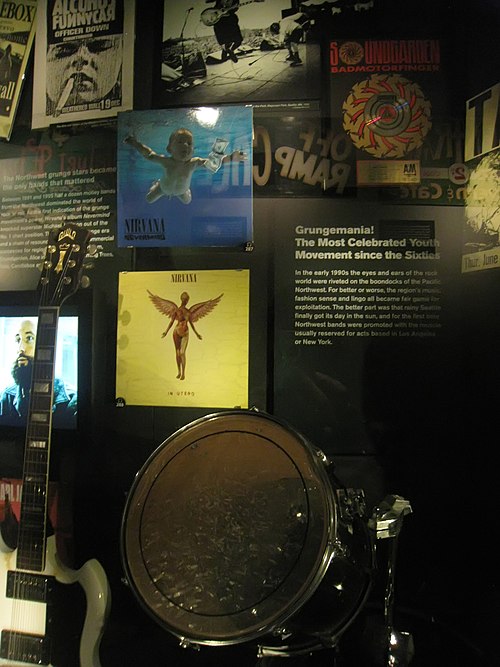
A museum exhibition about the Seattle music scene, with record sleeves of Nevermind and In Utero by Nirvana, along with Badmotorfinger by Soundgarden

Pearl Jam guitarist Mike McCready

The relatively affordable, widely available Boss DS-2 distortion pedal was one of the key effects (including the related DS-1) that created the growling, overdriven guitar sound in grunge.