Amalia Küssner Coudert
Videos
Photos
Amalia Küssner Coudert was an American artist from Terre Haute, Indiana, who is best known for her portrait miniatures of prominent American and European figures of the late 19th and early 20th century. Subjects for her paintings include actresses Lillian Russell and Marie Tempest; wealthy socialites Caroline Schermerhorn Astor, Emily Havemeyer ; members of Britain's royal family and London society such as King Edward VII, Alice Keppel, and Consuelo Vanderbilt, the Duchess of Marlborough; as well as members of the Russian royal family, including Czar Nicholas II and his wife, Czarina Alexandra Feodorovna; and wealthy industrialists such as Cecil Rhodes.

Amalia Küssner Coudert

Matilda Thora Wainwright Scott Strong, c. 1894, is representative of Coudert's watercolor miniatures on ivory.
Portrait miniature
Videos
Photos
A portrait miniature is a miniature portrait painting, usually executed in gouache, watercolor, or enamel. Portrait miniatures developed out of the techniques of the miniatures in illuminated manuscripts, and were popular among 16th-century elites, mainly in England and France, and spread across the rest of Europe from the middle of the 18th century, remaining highly popular until the development of daguerreotypes and photography in the mid-19th century. They were usually intimate gifts given within the family, or by hopeful males in courtship, but some rulers, such as James I of England, gave large numbers as diplomatic or political gifts. They were especially likely to be painted when a family member was going to be absent for significant periods, whether a husband or son going to war or emigrating, or a daughter getting married.
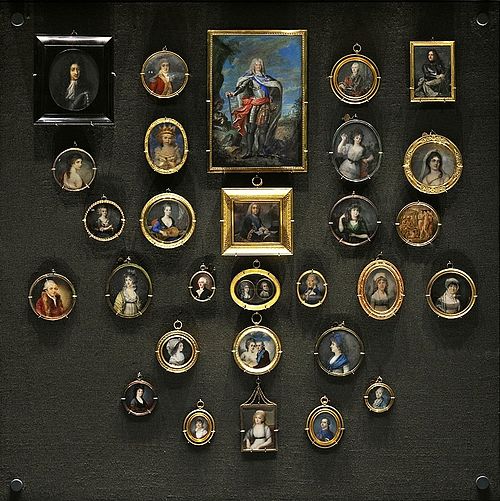
A display case with 18th-century portrait miniatures at the National Museum in Warsaw.

Portrait Miniature of Margaret Roper by Hans Holbein the Younger, c. 1535–36

Christian Horneman's miniature portrait of Ludwig van Beethoven (1802).

The future Duke of Wellington in 1808, by Richard Cosway.