American Revolution
Videos
The American Revolution was a political movement in the Thirteen Colonies of Great Britain. It began as a rebellion and turned into a revolution eventually creating the sovereign United States, which

The Committee of Five presenting its draft of the Declaration of Independence to the Second Continental Congress in Philadelphia on June 28, 1776, depicted in John Trumbull's 1818 portrait, Declaration of Independence

Notice of the Stamp Act 1765 in a colonial newspaper

Letter III of John Dickinson's Letters from a Farmer in Pennsylvania, published in the Pennsylvania Chronicle, December 1767

On June 9, 1772, the Sons of Liberty burned HMS Gaspee, a British customs schooner in Narragansett Bay.
American Revolutionary War
Videos
The American Revolutionary War, also known as the Revolutionary War or American War of Independence or simply the American Revolution, was the armed conflict that comprised the final eight years of th
American Revolution
…Britain. It began as a rebellion and turned into a revolution eventually creating the sovereign United States, which was the outcome of the associated American Revolutionary War (1775–1783). The Second Continental Congress, as the provisional government, established the Continental Army and appointed George Washington as its…
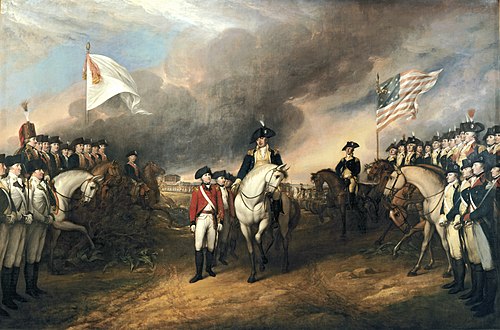
Surrender of Lord Cornwallis

Battle of Guilford Courthouse 15 March 1781

Battle of Trenton by Charles Mc Barron

Battleof Longisland