Anūnatvāpurnatvanirdeśa
Videos
The Anūnatvāpūrṇatvanirdeśaparivarta, also known as the Sutra of Non-increase and Non-decrease is a short Mahayana text belonging to the tathāgatagarbha class of Mahayana sutras. The main topic of the
Bhutanese thangka (cloth painting) depicting the Buddhist cosmos pervaded by Buddhas and bodhisattvas, c. 19th century.


Buddhist butterlamps at Swayambhu. The example of the inseparable nature of a lamp and its light is used to explain the indivisibility of buddha-nature with buddha qualities and wisdom

Buddha surrounded by bodhisattvas and other beings, painting at Sinwonsa temple, Gongju, South Korea.
The Mahāyāna Mahāparinirvāṇa Sūtra or Nirvana Sutra for short, is an influential Mahāyāna Buddhist scripture of the Buddha-nature class. The original title of the sutra was Mahāparinirvāṇamahāsūtra an
Anūnatvāpurnatvanirdeśa
…Sutra. Other scholars also note a close relationship between the teachings of the Anūnatvāpurnatvanirdeśa and other buddha-nature sutras like the Mahāparinirvāṇasūtra and the Tathāgatagarbhasūtra. Three Chinese commentaries were written on the AAN (by Saichō, Wŏnhyo, and 榮業 (unknown author)), but none of them survive…
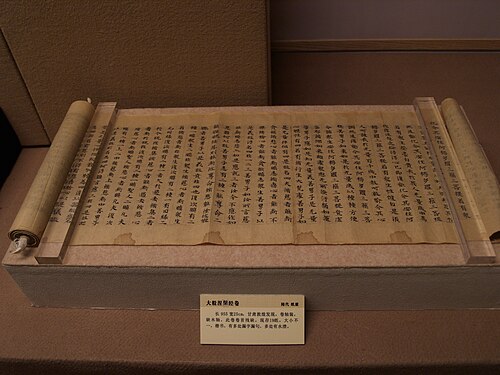
A Sui dynasty manuscript of the Nirvāṇa Sūtra

Cave complex associated with the Mahāsāṃghika sect. Karla Caves, Mahārāṣtra, India

Illustration of a chaitya cave temple, Karla Caves

Parinirvana scene in schist, Kushan dynasty, late 2nd to early 3rd century CE, Gandhara.