Ancient Greek comedy
Videos
Ancient Greek comedy was one of the final three principal dramatic forms in the theatre of classical Greece; the others being tragedy and the satyr play. Greek comedy was distinguished from tragedy by
Theatrical scene with two comedic actors on a Sicilian red-figure calyx-krater c. 350–340 BC.


Terracotta comic theatre mask, 3rd century BC (Stoa of Attalus, Athens)

Marble image of a theatre mask, 2nd-century BC.

An actor in the mask of a bald man, 2nd century BC
Aristophanes
Videos
Aristophanes was an Ancient Greek comic playwright from Athens. He wrote forty plays, of which eleven survive virtually complete. The majority of his surviving plays belong to the genre of comic drama
Ancient Greek comedy
…the comedy. Athenian comedy is conventionally divided into three periods; Old Comedy survives today largely in the form of the eleven extant plays of Aristophanes; Middle Comedy is largely lost and preserved only in relatively short fragments by authors such as Athenaeus of Naucratis; New Comedy is known primarily…
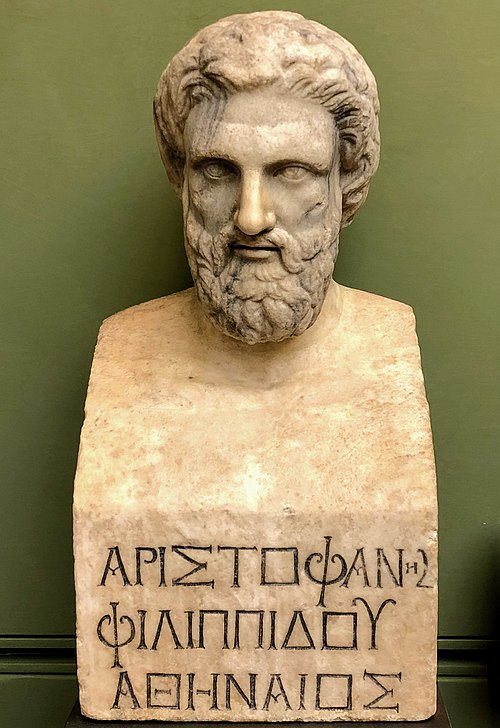
Bust with the inscription "Aristophanes, (son) of Philippides, the Athenian", 1st century AD

Theatre of Dionysus, Athens – in Aristophanes's time, the audience probably sat on wooden benches with earth foundations.

Muse reading, Louvre

Thalia, muse of comedy, gazing upon a comic mask (detail from Muses' Sarcophagus)