Ancient Greek technology developed during the 5th century BC, continuing up to and including the Roman period, and beyond. Inventions that are credited to the ancient Greeks include the gear, screw, rotary mills, bronze casting techniques, water clock, water organ, the torsion catapult, the use of steam to operate some experimental machines and toys, and a chart to find prime numbers. Many of these inventions occurred late in the Greek period, often inspired by the need to improve weapons and tactics in war. However, peaceful uses are shown by their early development of the watermill, a device which pointed to further exploitation on a large scale under the Romans. They developed surveying and mathematics to an advanced state, and many of their technical advances were published by philosophers, like Archimedes and Heron.

The watermill, as the first machine harnessing natural forces (apart from the sail) and as such holding a special place in the history of technology, was invented by Greek engineers sometime between the 3rd and 1st centuries BC. Here a Roman gristmill as described by Vitruvius.
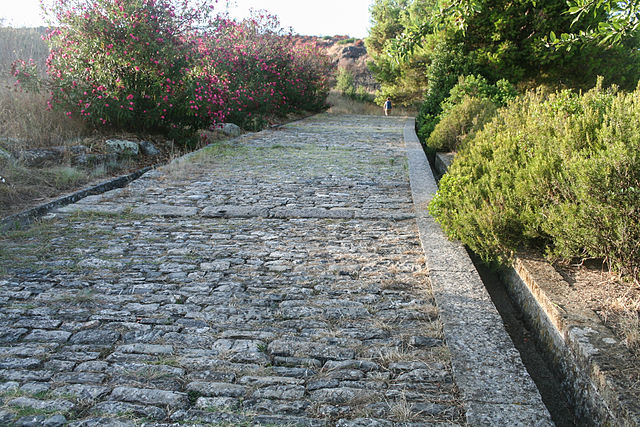
Image: Greek street III century BC Porta Rosa Velia Italy
Image: Diolkos 1
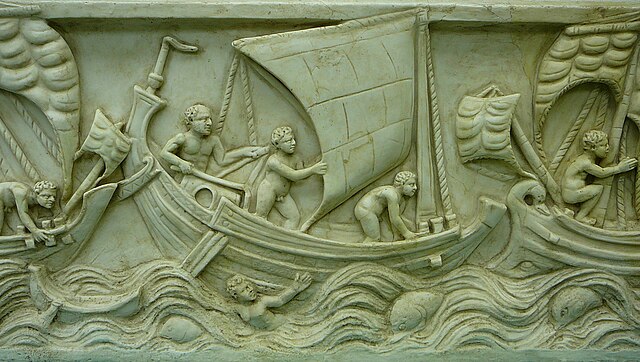
Image: Museum für Antike Schifffahrt, Mainz 02. Spritsail
Hero of Alexandria was a Greek mathematician and engineer who was active in his native city of Alexandria in Egypt during the Roman era. He is often considered the greatest experimenter of antiquity and his work is representative of the Hellenistic scientific tradition.
The book About automata by Hero of Alexandria (1589 edition)