Ancient Roman architecture
Videos
Ancient Roman architecture adopted the external language of classical ancient Greek architecture for the purposes of the ancient Romans, but was different from Greek buildings, becoming a new architec

The Colosseum in Rome (c. 70–80)

The Maison carrée in Nîmes (France), one of the best-preserved Roman temples, c. 2 AD

Aqueduct of Segovia (1st century AD), Segovia, Spain

The triumphal arch and monumental mausoleum of Glanum, France, the former built between 10–25 AD during the reign of Augustus and Tiberius (early Roman Empire), and the latter built by 40 BC, or even 30–20 BC, dedicated to veterans of the Gallic Wars during the late Roman Republic
Colosseum
Videos
The Colosseum is an elliptical amphitheatre in the centre of the city of Rome, Italy, just east of the Roman Forum. It is the largest ancient amphitheatre ever built, and is the largest standing amphi
Ancient Roman architecture
…imposing infrastructure for public use. Examples include the aqueducts of Rome, the Baths of Diocletian and the Baths of Caracalla, the basilicas and Colosseum. These were reproduced at a smaller scale in the most important towns and cities in the Empire. Some surviving structures are almost complete, such as…

Interior of the Colosseum by late nineteenth century photographer Francis Frith
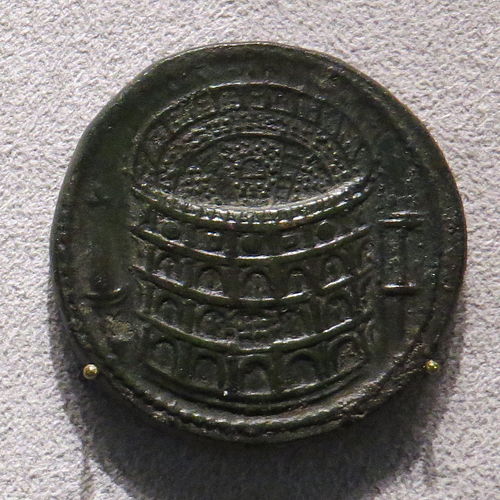
Sestertius of Titus celebrating the inauguration of the Colosseum (minted 80 AD).

The Colosseum in the 1530s, sketched by Maarten van Heemskerck, and used as the model for his later Self-Portrait with the Colosseum and Octo Mundi Miracula.