Ancient maritime history
Videos
Maritime history dates back thousands of years. The earliest watercraft used by humans were rafts, as they needed less sophisticated wood-working skills to make. The oldest archaeological survival of
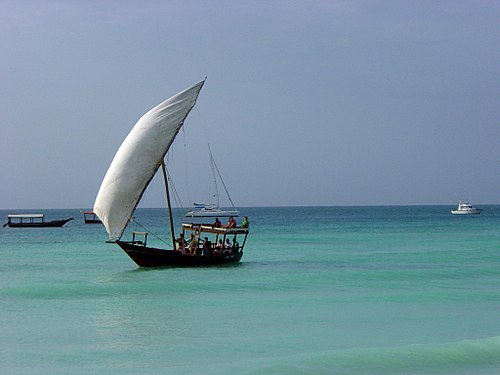
Much of the Radhanites' Indian Ocean trade would have depended on coastal cargo-ships such as this dhow.

World's oldest depiction of a stern-mounted steering rudder (c. 1420 BC)

The world according to Herodotus, 440 BC

Historical Somali commercial enterprise in the Red Sea, the Persian Gulf, the Indian Ocean, and the straits of Malacca.
Maritime Silk Road
Videos
The Maritime Silk Road or Maritime Silk Route is the maritime section of the historic Silk Road that connected Southeast Asia, East Asia, the Indian subcontinent, the Arabian Peninsula, eastern Africa

Jade lingling-o pendants from the Austronesian Sa Huỳnh culture of southern Vietnam (c. 2,500-2,200 BP). These were traded in ancient maritime trade routes from 2000 BCE to 1000 BCE, largely between the Philippines, southern Vietnam, Borneo, and Taiwan, across the South China Sea

Ruins of the Mỹ Sơn Hindu temple complex (c. 4th century CE) of the Austronesian Champa polities of central and southern Vietnam, along the main route of the Maritime Silk Road

One of the Borobudur ships from the 8th century, they were depictions of large Javanese outrigger vessels. Shown with the characteristic tanja sail of Southeast Asian Austronesians

Planks from one of the Butuan ship burials (c. 689 to 988 CE) from the Philippines, showing protruding lugs and holes where dowels were inserted in the distinctively Austronesian lashed-lug shipbuilding tradition