Animal Coloration (book)
Videos
Animal Coloration, or in full Animal Coloration: An Account of the Principal Facts and Theories Relating to the Colours and Markings of Animals, is a book by the English zoologist Frank Evers Beddard,
Cover of first edition


Title page of first edition, 1892

Plate II, "Kallima butterfly". (How many insects are in the image?)

Plate I, A group of protectively coloured animals
Animal coloration
Videos
Animal coloration is the general appearance of an animal resulting from the reflection or emission of light from its surfaces. Some animals are brightly coloured, while others are hard to see. In some
Animal Coloration (book)
…The main topics covered are camouflage, then called 'protective coloration'; mimicry; and sexual selection. Arguments for and against these aspects of animal coloration are intensively discussed in the book. The book was reviewed in 1892 by the major journals including The Auk, Nature, and Science. The scientist reviewers…

A brilliantly-coloured oriental sweetlips fish (Plectorhinchus vittatus) waits while two boldly-patterned cleaner wrasse (Labroides dimidiatus) pick parasites from its skin. The spotted tail and fin pattern of the sweetlips signals sexual maturity; the behaviour and pattern of the cleaner fish signal their availability for cleaning service, rather than as prey.

Bright coloration of orange elephant ear sponge, Agelas clathrodes signals its bitter taste to predators
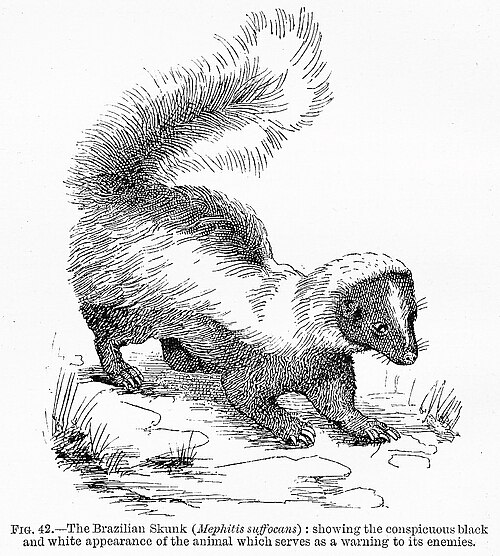
Warning coloration of the skunk in Edward Bagnall Poulton's The Colours of Animals, 1890

In Roseate Spoonbills 1905–1909, Abbott Handerson Thayer tried to show that even the bright pink of these conspicuous birds had a cryptic function.