Antaeus
Videos
Antaeus, known to the Berbers as Anti, was a figure in Berber and Greek mythology. He was famed for his defeat by Heracles as part of the Labours of Heracles.

Heracles and Antaeus, red-figured krater by Euphronios, 515–510 BC, Louvre

Msoura in 1830

Sculpture from the late Hellenistic period, a copy of an original from the 5th or 4th century BC

Attic red-figure kylix, dating to c. 500 BC
Heracles
Videos
Heracles, born Alcaeus or Alcides, was a divine hero in Greek mythology, the son of Zeus and Alcmene, and the foster son of Amphitryon. He was a descendant of Perseus, another son of Zeus.
Antaeus
…derived from ἀντάω, antáō, 'I face, I oppose'), known to the Berbers as Anti, was a figure in Berber and Greek mythology. He was famed for his defeat by Heracles as part of the Labours of Heracles. In Greek sources, he was the son of Poseidon and Gaia, who lived in the interior desert of Libya. According to the…
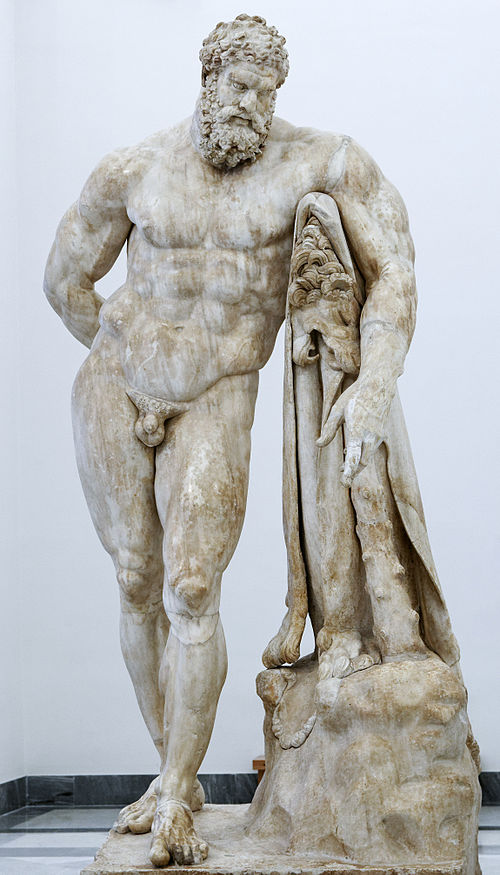
One of the most famous depictions of Heracles, Farnese Hercules, Roman marble statue on the basis of an original by Lysippos, 216 CE. National Archaeological Museum, Naples, Italy
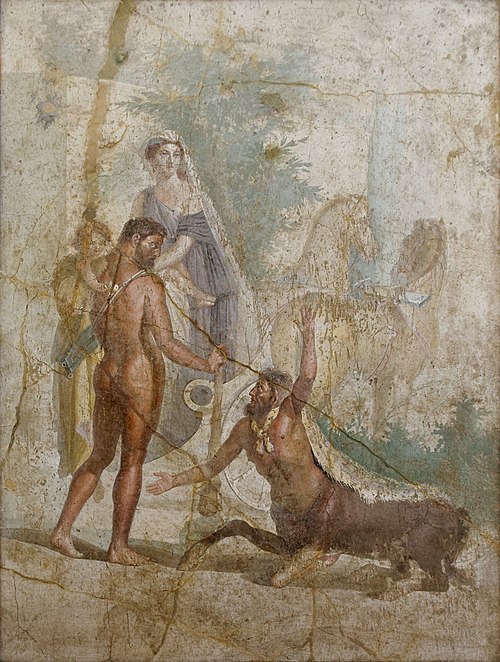
Heracles carrying his son Hyllus looks at the centaur Nessus, who is about to carry Deianira across the river on his back. Antique fresco from Pompeii.

Greek mythology influenced the Etruscans. This vase at Caere shows King Eurytus of Oechalia and Heracles in a symposium. Krater of corinthian columns called 'Krater of Eurytion', c. 600 BCE

Heracles strangling snakes (detail from an Attic red-figured stamnos, c. 480–470 BCE)