Anti-Christian sentiment
Videos
Anti-Christian sentiment, also referred to as Christianophobia or Christophobia, is the irrational fear, hatred, discrimination, or prejudice against Christians and/or aspects of the Christian religio
Anti-Christian graffiti from the Roman Empire. The text reads "ΑΛΕ ΞΑΜΕΝΟϹ ϹΕΒΕΤΕ ΘΕΟΝ" ("Alexamenos worships his god").


Anti-Western pamphlet issued in China during the Boxer Rebellion, depicting Jesuit missionaries (derogatorily labelled as ghosts) bowing down before a pig, as the Chinese word for pig (猪, pronounced zhū), sounded similar to the word for 'Lord' (主, pronounced zhǔ) used by Chinese Christians.

Christians fleeing their homes in the Ottoman Empire, c. 1922. Many Christians were persecuted and/or killed during the Armenian genocide, Greek genocide, and Assyrian genocide.

Remains of a church property burnt down during 2008 Kandhamal violence in Orissa, India, in August 2008
Persecution of Christians
Videos
The persecution of Christians can be traced from the first century of the Christian era to the present day. Christian missionaries and converts to Christianity have both been targeted for persecution,
Anti-Christian sentiment
…These terms encompass "every form of discrimination and intolerance against Christians". The presence of anti-Christian sentiment has led to the persecution of Christians throughout history. In January 2026, the European Parliament recognized the term "Christianophobia" for the first time in an annual human rights and…

Death of Saint Stephen, "the Protomartyr", recounted in Acts 7, depicted in an engraving by Gustave Doré (published 1866)

Crucifixion of Saint Peter by Caravaggio (1600, Cerasi Chapel)
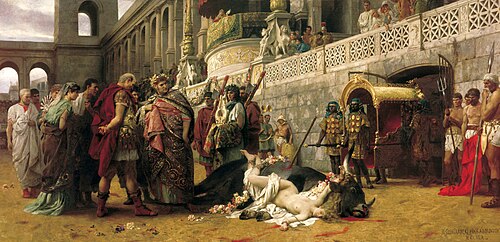
A Christian Dirce, by Henryk Siemiradzki (1897, National Museum, Warsaw) A Christian woman is martyred under Nero in this re-enactment of the myth of Dirce