Anti-Normanism
Videos
Normanism and anti-Normanism are competing groups of theories about the origin of Kievan Rus' that emerged in the 18th and 19th centuries concerning the narrative of the Viking Age in Eastern Europe.

The Invitation of the Varangians by Viktor Vasnetsov: Rurik and his brothers Sineus and Truvor arrive to the lands of Ilmen Slavs.

A caricature on disagreement between Nikolay Kostomarov and Mikhail Pogodin on issue of whom were Varangians (Litvins or Normans)
Rurik
Videos
Rurik was a Varangian chieftain of the Rus' who, according to tradition, was invited to reign in Novgorod in the year 862. The Primary Chronicle states that Rurik was succeeded by his kinsman Oleg who
Anti-Normanism
…name Rus' can readily be interpreted as originating in Old Norse. The personal names of the first few Rus' leaders are etymologically Old Norse, from Rurik (from Old Norse "Hrærekr") down to Olga of Kiev (from Old Norse "Helga"). Starting with Olga's son Sviatoslav I of Kiev onwards, Slavic names take over…

Rurik on the 19th-century "Millennium of Russia" monument in Veliky Novgorod

Image of Rurik in the Tsarsky titulyarnik (1672)
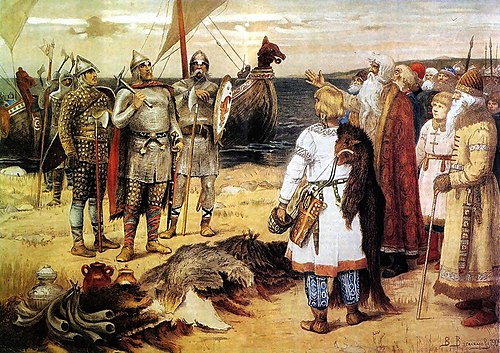
Rurik and his brothers Sineus and Truvor arrive at Ladoga. Painted by Viktor Vasnetsov (c. 1913)

The Varangians Rurik, Sineus and Truvor are approached by messengers from the east. Drawn by Fyodor Bruni (c. 1839)