Antimony
Videos
Antimony is a chemical element with the symbol Sb and atomic number 51. A lustrous grey metal or metalloid, it occurs in nature mainly in the form of the sulfide mineral stibnite. Antimony compounds h
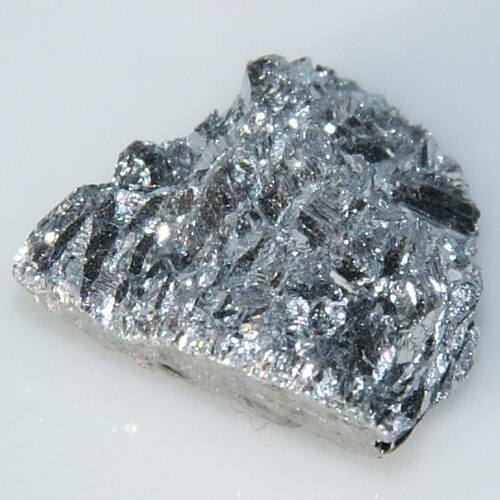
Antimony 4

Native antimony with oxidation products

Stibnite, China CM29287 Carnegie Museum of Natural History specimen on display in Hillman Hall of Minerals and Gems

The Italian metallurgist Vannoccio Biringuccio described a procedure to isolate antimony in 1540.
Stibnite
Videos
Stibnite, sometimes called antimonite, is a sulfide mineral, a mineral form of antimony trisulfide. It is a soft, metallic grey crystalline solid with an orthorhombic space group. It is the most impor
Antimony
…symbol Sb (from Latin stibium) and atomic number 51. A lustrous grey metal or metalloid, it occurs in nature mainly in the form of the sulfide mineral stibnite (Sb2S3). Antimony compounds have been known since ancient history and were powdered for use as cosmetics (often known by the Arabic name kohl) and as…

Antimonit 02

Stibnite from Herja mine, Romania

Stibnite from Herja mine, Romania

Needles of stibnite within a transparent crystal of calcite (size: 4.5×3.5×1.8 cm)