Anunnaki
Videos
The Anunnaki are a group of deities of the ancient Sumerians, Akkadians, Assyrians and Babylonians. In the earliest Sumerian writings about them, which come from the Post-Akkadian period, the Anunnaki
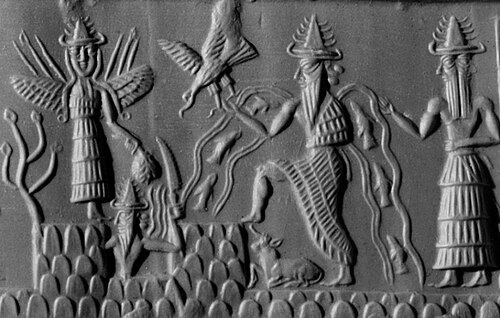
Akkadian cylinder seal dating to c. 2300 BCE depicting the deities Inanna, Enki, and Utu, three members of the Anunnaki

Akkadian cylinder seal impression depicting a vegetation goddess, possibly Ninhursag, sitting on a throne surrounded by worshippers (c. 2350–2150 BCE)

Four copper-alloy foundation figures depicting ancient Mesopotamian gods wearing characteristic horned crowns (c. 2130 BCE)

Babylonian representation of the national god Marduk, who the Babylonians and Assyrians envisioned as a prominent member of the Anunnaki
Anu
Videos
Anu or Anum, originally An, was the divine personification of the sky, king of the gods, and ancestor of many of the deities in ancient Mesopotamian religion. He was regarded as a source of both divin
Anunnaki
…In the earliest Sumerian writings about them, which come from the Post-Akkadian period, the Anunnaki are deities in the pantheon, descendants of An (the god of the heavens) and Ki (the goddess of earth), and their primary function was to decree the fates of humanity. In Sumerian, the name of this…

Symbols of various deities, including Anu (rightmost, second row) on a kudurru of Ritti-Marduk, from Sippar, Iraq, 1125–1104 BCE
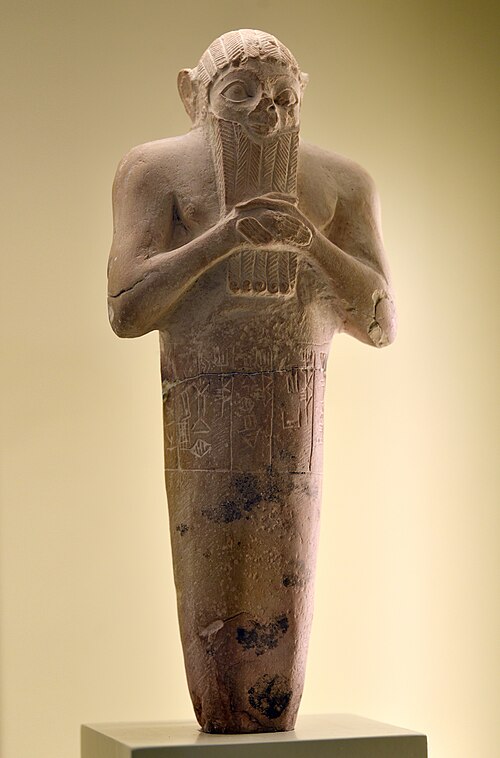
A foundation figurine of king Lugal-kisalsi. The inscription mentions Nammu and Anu as wife and husband.

Part of the front of a Babylonian temple to Ishtar in Uruk, built c. 1415 BCE, during the Kassite Period (c. 1600—1155 BCE). It has been argued in the past that it was first dedicated to Anu, and only later to Inanna, but this view is no longer regarded as plausible.
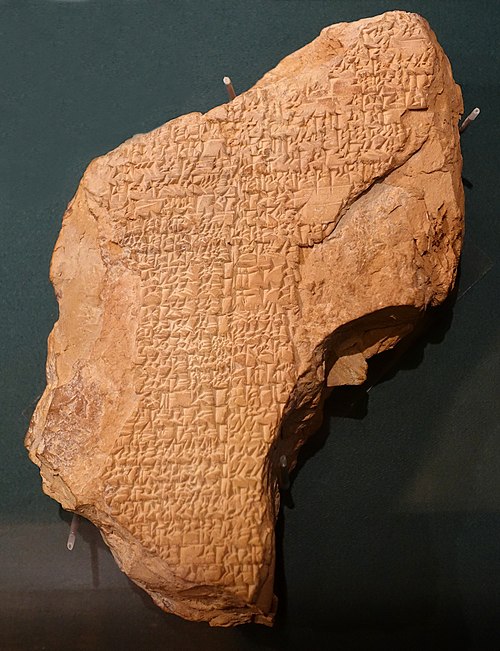
The original Sumerian clay tablet of Inanna and Ebiḫ, which is currently housed in the Oriental Institute at the University of Chicago