Apotropaic magic
Videos
Apotropaic magic or protective magic is a type of magic intended to turn away harm or evil influences, as in deflecting misfortune or averting the evil eye. Apotropaic observances may also be practice
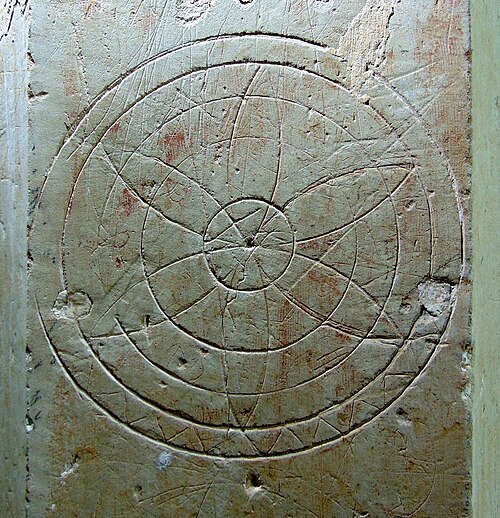
Medieval apotropaic marking on the inside of a church in Suffolk, England

The Gorgon, flanked by lionesses and showing her belt clasp of serpents; the pediment of the 580 BCE temple of Artemis in Corfu. Archaeological Museum of Corfu.
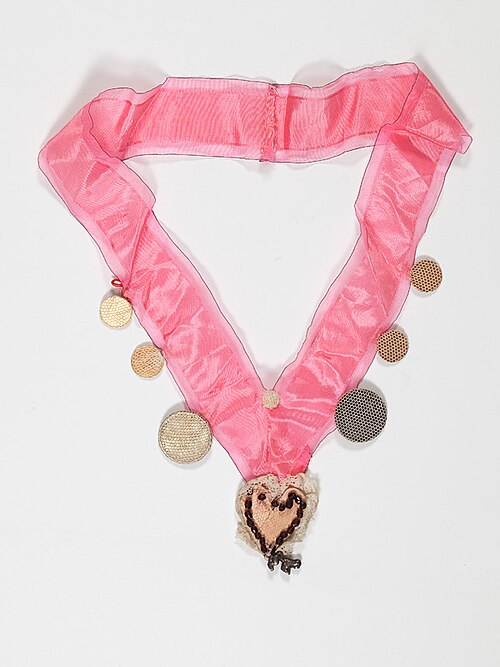
Jewish apotropaic neckband sewn with coins to deflect the evil eye. 1944, Basel, in the Jewish Museum of Switzerland's collection.

An ancient Egyptian apotropaic wand shows a procession of protective deities. It was used in birth rituals, perhaps to draw a magic circle around the mother and child.
Knocking on wood
Videos
Knocking on wood is an apotropaic tradition of literally touching, tapping, or knocking on wood, or merely stating that one is doing or intending to do so, in order to avoid "tempting fate" after maki
Apotropaic magic
…of superstition or out of tradition, as in good luck charms (perhaps some token on a charm bracelet), amulets, or gestures such as crossed fingers or knocking on wood, or as part of complex rituals of social transformation such as migration. Many different objects and charms are used for protection by many peoples…

Katie Beirne Fallon and Shaun Donovan knocking on wood in the Oval Office (2015)