Aquatic locomotion
Videos
Aquatic locomotion or swimming is biologically propelled motion through a liquid medium. Swimming by different mechanisms has evolved repeatedly in organisms including arthropods, fish, molluscs, amph

A great cormorant swimming

Octopuses swim headfirst, with arms trailing behind.
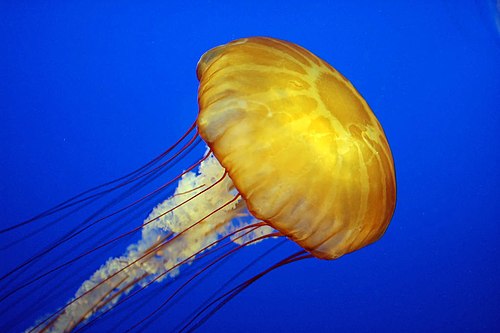
Jellyfish contract muscles in the jellylike bell to propel themselves. The elastic recoil creates a second (stop) vortex, adding efficiency.

Scallops swim by opening the gape of their two shells and clapping them closed.
Fin and flipper locomotion
Videos
Fin and flipper locomotion occurs mostly in aquatic locomotion, of nektonic animals with paired appendages, more specifically aquatic vertebrates and most coleoids. These appendages have a large wette

A species of mudskipper (Periophthalmus gracilis)

Mudskippers in The Gambia

Loggerhead sea turtle crawling

Antennarius striatus