Arcade (architecture)
Videos
An arcade is a succession of contiguous arches, with each arch supported by a colonnade of columns or piers. Exterior arcades are designed to provide a sheltered walkway for pedestrians; they include
Norman blind arcade, Ely Cathedral


Arcades of the Colosseum (AD 70s) from the outside
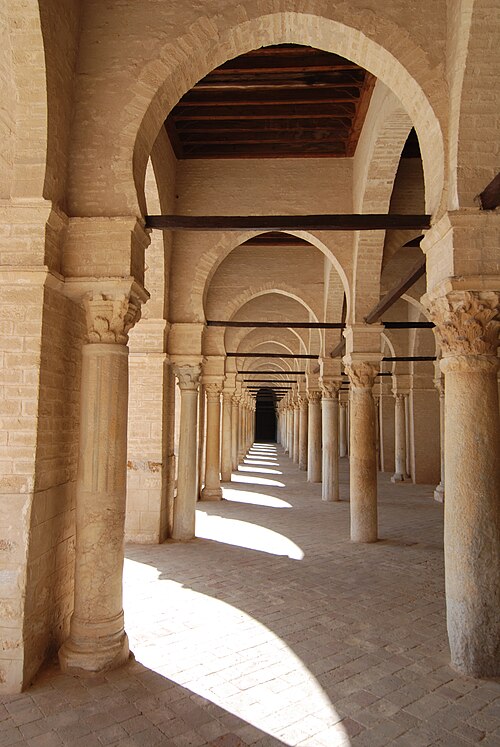
Arcades inside the Mosque of Uqba, also known as the Great Mosque of Kairouan, in Tunisia (670). There is no vaulting; the arches are bridged by wooden beams

These arcades in Córdoba were begun in the 780s; Some are topped by beams, others by barrel vaults.
Cleveland Arcade
Videos
The Arcade in downtown Cleveland, Ohio, is a Victorian-era structure of two nine-story buildings, joined by a five-story arcade with a glass skylight spanning over 300 feet, along the four balconies.
Arcade (architecture)
…Çiçek Pasajı, Istanbul, Turkey Cleveland Arcade, Cleveland, Ohio, United States The Corridor, Bath, England…

Looking down the length of The Arcade

Looking down the length of The Arcade Interior of The Arcade in downtown Cleveland, looking south toward Euclid Avenue; March 7, 1966

The Arcade (ca. 1910–1920)