Architecture of Kerala
Videos
Photos
Kerala architecture is a style of architecture found in the Indian state of Kerala, and in parts of the Tulu Nadu region of Karnataka. Kerala's architectural style includes a unique Hindu temple architecture that emerged in southwestern India, in slight contrast to Dravidian architecture practised in other parts of southern India. The architecture of Kerala has been derived from Indian Vedic architectural tradition and forms a part of Dravidian architecture, one of the three styles of temples mentioned in the ancient books on Vastu Shastra. The Tantrasamuchaya, Thachu-Shastra, Manushyalaya Chandrika, and Silparatna are all architectural treatises that have had an impact on the architecture of Kerala. The Manushyalaya Chandrika, a work devoted to domestic architecture, has its roots in Kerala.

Traditional features of Kerala architecture with low roofs and wood work.

The temple entrance gateway called Gopuram in Aranmula, Kerala.

Traditional courtyard called Nadumuttom surrounded by woodwork windows called Charupadi.

"Arayum" wooden-panel walls and "Chuttu" verandah. Wooden houses follow the traditional prefabricated system of construction.
Dravidian architecture
Videos
Photos
Dravidian architecture, or the Southern Indian temple style, is an architectural idiom in Hindu temple architecture that emerged from Southern India, reaching its final form by the sixteenth century.

Gopurams around a large temple dwarf the older central structures. The Annamalaiyar Temple in Tiruvannamalai, Tamil Nadu
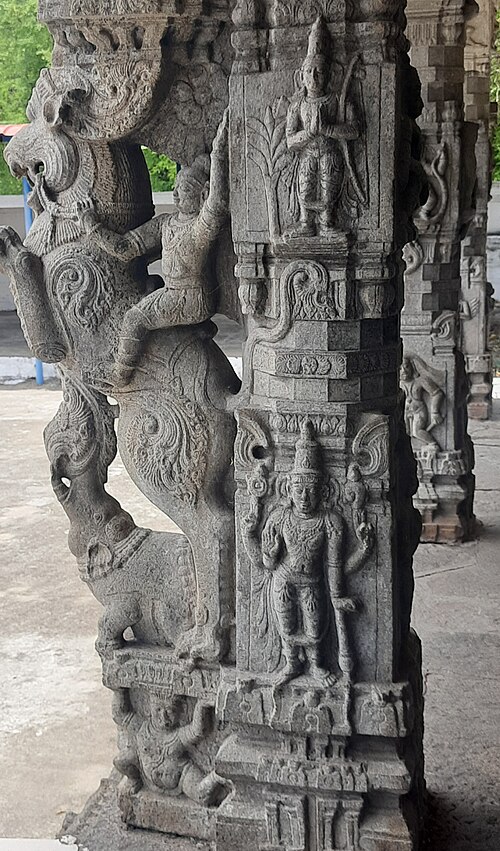
Vijayanagara style architecture characterized by Yali pillars at Sri Kalyana Ramaswamy temple in Thenkaraikottai, Ramaiyampati.

Stone vel on a brick platform at the entrance to the Murugan Temple, Saluvankuppam, Tamil Nadu, 300 BCE-300 CE

Chennai Parthasarathy Perumal Temple is One of the oldest temples of Pallavas dating early 500 CE