The Armistice of 11 November 1918 was the armistice that ended fighting on land, at sea, and in the air in World War I between the Entente and their last remaining opponent, Germany. It was signed in
Photograph taken after reaching agreement for the armistice that ended World War I. This is Ferdinand Foch's own railway carriage in the Forest of Compiègne. Foch's chief of staff Maxime Weygand is second from left. Third from the left is the senior British representative, Sir Rosslyn Wemyss. Foch is second from the right. On the right is Admiral Sir George Hope.


German prisoners of war captured near Amiens in late August 1918

Hindenburg, Kaiser Wilhelm and Ludendorff in discussion at the General Headquarters in Pleß Castle, in Silesia (modern-day Pszczyna, Poland).
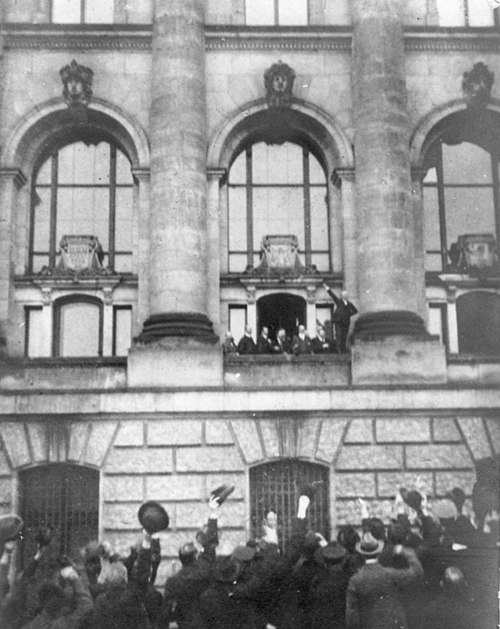
The declaration of the Republic at the Reichstag building on 9 November
Ferdinand Foch
Videos
Ferdinand Foch was a French general, Marshal of France and a member of the Académie Française and Académie des Sciences. He distinguished himself as Supreme Allied Commander on the Western Front durin
Armistice of 11 November 1918
…Waffenstillstand von Compiègne) from the town near the place where it was officially agreed to at 5:00 a.m. by the Allied Supreme Commander, French Marshal Ferdinand Foch, it came into force at 11:00 a.m. Paris Time (11:00 UT) on 11 November 1918 and marked a victory for the Entente and a defeat for Germany, although not…

Foch in c. 1914

Foch's birthplace in Tarbes

General Foch in 1916

Foch, Weygand, Haig, Pétain and other British and French officers with King George V, 1918