Art of Champa
Videos
Champa was an Southeast Asian civilization that flourished along the coasts of what is now central and southern Vietnam for roughly a one thousand-year period between 500 and 1700 AD. The original Cha
This late 11th- or 12th-century sculpture illustrates both the preferred medium of the Cham artists (stone sculpture in high relief), and the most popular subject-matter, the god Shiva and themes associated with the god. Shiva can be recognized by the third eye in the middle of his forehead and by the attribute of the trident. The hands above his head are making the gesture called uttarabodhi mudra, which is regarded as a symbol of perfection.

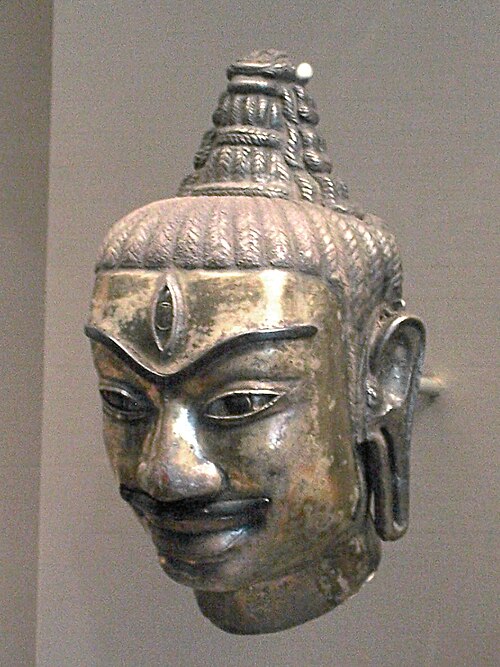
This Cham kosa, or metal sleeve to be fitted over a linga, is the face of shiva, as can be recognized from the third eye in the center of the forehead and the chignon hairstyle known as jatamukuta.

Chiên Đàn temple in Quảng Nam province.

The profile of the 13th-century temple Po Klong Garai near Phan Rang includes all the buildings typical of a Cham temple. From left to right one can see the kalan, the attached mandapa, the saddle-shaped kosgrha, and the gopura.
Mỹ Sơn
Videos
Mỹ Sơn is a cluster of abandoned and partially ruined Shaiva Hindu temples in central Vietnam, constructed between the 4th and the 13th century by the Kings of Champa, an Indianized kingdom of the Cha

2024 Mỹ Sơn Group B, C and D img 23

2024 04 03 My Son 3847167A3847

2024 Mỹ Sơn Sanctuary Temple E7 img 01

2024 Mỹ Sơn Group A img 10