Art of Mesopotamia
Videos
The art of Mesopotamia has survived in the record from early hunter-gatherer societies on to the Bronze Age cultures of the Sumerian, Akkadian, Babylonian and Assyrian empires. These empires were late
Diorite statue of Gudea, prince of Lagash, dedicated to the god Ningishzida; 2120 BC (the Neo-Sumerian period); height: 46 cm, width: 33 cm, depth: 22.5 cm Gudea of Lagash was famous for his numerous portrait sculptures that have been recovered throughout Iraq.

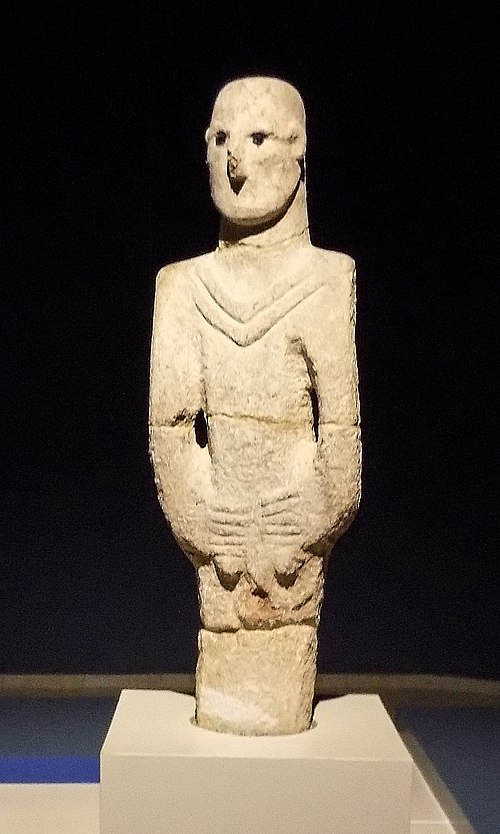
The Urfa Man, from Upper Mesopotamia circa 9000 BC, the "oldest naturalistic life-sized sculpture of a human". Şanlıurfa Museum.

Jar in calcite alabaster, Syria, late 8th millennium BC.

Female statuette, 8th millennium BC, Syria.
Assyrian sculpture
Videos
Assyrian sculpture is the sculpture of the ancient Assyrian states, especially the Neo-Assyrian Empire of 911 to 612 BC, which was centered around the city of Assur in Mesopotamia which at its height,


"Winged genie", Nimrud c. 870 BC, with inscription running across his midriff.

Part of the Lion Hunt of Ashurbanipal, c. 645–635 BC

Detail of genie figure, the palace of Ashurnasirpal II