Field Marshal Arthur Wellesley, 1st Duke of Wellington, was a British Army officer and statesman. A leading figure in early-19th-century British politics, Wellesley served as Prime Minister of the Uni
Portrait of the Duke of Wellington, by Sir Thomas Lawrence, c. 1815–1816


Wellesley spent much of his early childhood at his family's ancestral home, Dangan Castle in County Meath, Ireland (engraving, 1842).

Beginning in 1787, Wellesley served at Dublin Castle (pictured) as aide-de-camp to two successive Lords Lieutenant of Ireland

Wellesley as Lieutenant Colonel, aged c. 26, in the 33rd Regiment. Portrait of Arthur Wellesley by John Hoppner, 1795.
Robert Peel
Videos
Sir Robert Peel, 2nd Baronet, was a British Conservative statesman who served as Prime Minister of the United Kingdom, Chancellor of the Exchequer, and Home Secretary. He is regarded as the father of
Arthur Wellesley, 1st Duke of Wellington
…Wellington refused to serve under Canning, and also wrote to the King to resign his position as Commander-in-Chief. When Parliament resumed in May, Robert Peel made a speech in the Commons justifying the conduct of the ministers who had resigned, and Wellington gave an effective speech in the Lords to the same…
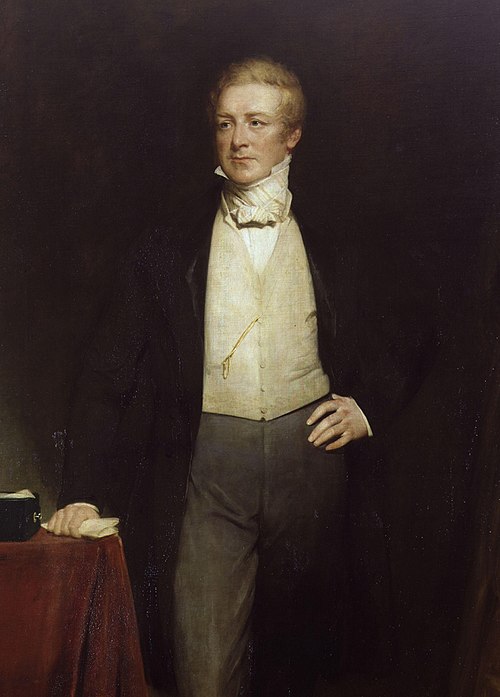
Portrait by Henry William Pickersgill

Christ Church, Oxford, which Peel attended 1805–1808, graduating with a double first. He was later MP for the university, 1817–1829.
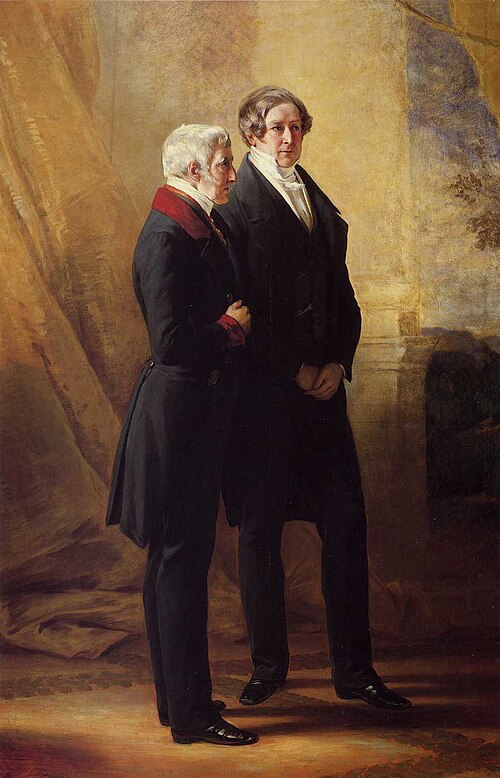
The Duke of Wellington and Sir Robert Peel, 1844, by Franz Xaver Winterhalter

Burking Poor Old Mrs Constitution. This satirical 1829 cartoon by William Heath depicted the Duke of Wellington and Peel in the roles of the body-snatchers Burke and Hare suffocating Mrs Docherty for sale to Dr. Robert Knox; representing the extinguishing by Wellington and Peel of the 141-year-old Constitution of 1688 by Catholic emancipation.