Article 231, often known as the war guilt clause, was the opening article of the reparations section of the Treaty of Versailles, which ended the First World War between the German Empire and the Alli

Avocourt, 1918, one of the many destroyed French villages, candidates for reconstruction funded by reparations

Norman Davis, one of the two authors of Article 231
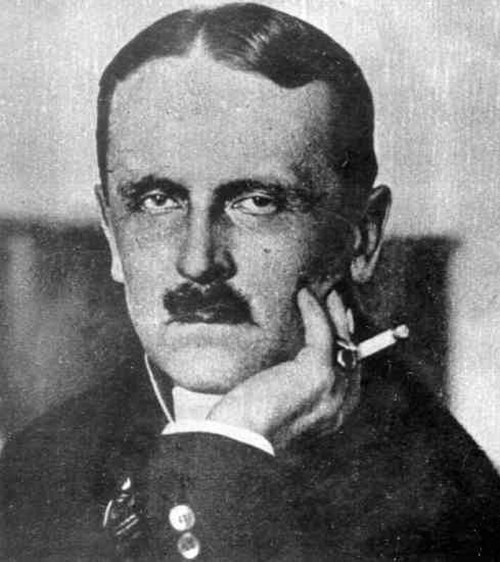
Count Ulrich von Brockdorff-Rantzau

Trains, loaded with machinery, deliver their cargo as reparation payment in kind.
Weimar Republic
Videos
The Weimar Republic was a historical period of the German state from 9 November 1918 to 23 March 1933, during which it was a constitutional republic for the first time in history. The state was offici

Sailors during the mutiny in Kiel, November 1918

Philipp Scheidemann addresses a crowd from a window of the Reich Chancellery, 9 November 1918.

Members of the 1919 Weimar government

Crowds in Berlin watching the Marinebrigade Ehrhardt march in under the imperial war ensign during the Kapp Putsch