Article One of the Constitution of the United States establishes the legislative branch of the federal government, the United States Congress. Under Article One, Congress is a bicameral legislature co

Opening of the 112th Congress in the House of Representatives chamber, January 5, 2011
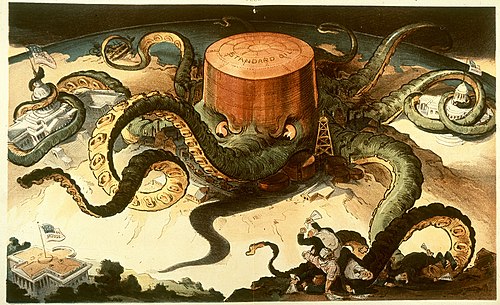
The Seventeenth Amendment, by which senators became directly elected, prevented Gilded Age monopolies from controlling the U.S. Senate (left) by corrupting state legislatures (right), who were previously responsible for appointing the states' respective U.S. senators.

The impeachment trial of President Clinton in 1999, with Chief Justice William Rehnquist presiding

Newly naturalized citizen Albert Einstein received his certificate of American citizenship from Judge Phillip Forman on October 1, 1940.
The Seventeenth Amendment to the United States Constitution established the direct election of United States senators in each state. The amendment supersedes Article I, Section 3, Clauses 1 and 2 of t
Article One of the United States Constitution
…state, with each senator serving a six-year term. Section 3 originally required that the state legislatures elect the members of the Senate, but the Seventeenth Amendment, ratified in 1913, provides for the direct election of senators. Section 3 lays out other rules for the Senate, including a provision that establishes…

The Seventeenth Amendment in the National Archives

James Wilson was the only member of the Constitutional Convention who supported electing the United States Senate by popular vote.

William Jennings Bryan campaigned for the popular election of U.S. senators.