Arts and Crafts movement
Videos
The Arts and Crafts movement was an international trend in the decorative and fine arts that developed earliest and most fully in the British Isles and subsequently spread across the British Empire an
William Morris's design for Trellis wallpaper, 1862

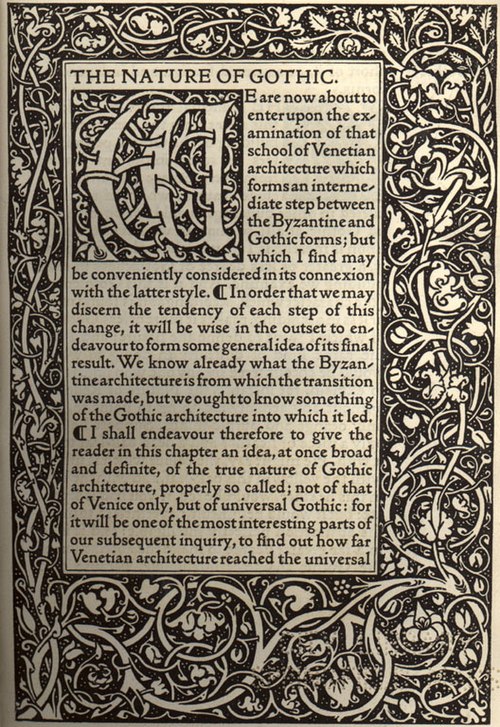
The Nature of Gothic by John Ruskin, printed by William Morris at the Kelmscott Press in 1892 in his Golden Type inspired by the 15th-century printer Nicolas Jenson. This chapter from The Stones of Venice was a sort of manifesto for the Arts and Crafts movement.

Pugin's house "The Grange" in Ramsgate, from 1843. Its simplified Gothic Revival style, adapted to domestic building, helped shape the architecture of the Arts and Crafts movement.

William Morris, a designer and thinker who was a key influence on the Arts and Crafts movement
Art Nouveau
Videos
Art Nouveau is an international style of art, architecture, and applied art, especially the decorative arts. It was often inspired by natural forms such as the sinuous curves of plants and flowers. Ot
Arts and Crafts movement
…America between about 1880 and 1920. Some consider that it is the root of the Modern Style, a British expression of what later came to be called the Art Nouveau movement. Others regard it as the incarnation of Art Nouveau in England. Others consider Art and Crafts to be in opposition to Art Nouveau. Arts and…

Abbesses

Otto Eckmann Jugend Nr. 14, 1896

Louis comfort tiffany, lampada da tavolo pomb lily, 1900 10 ca
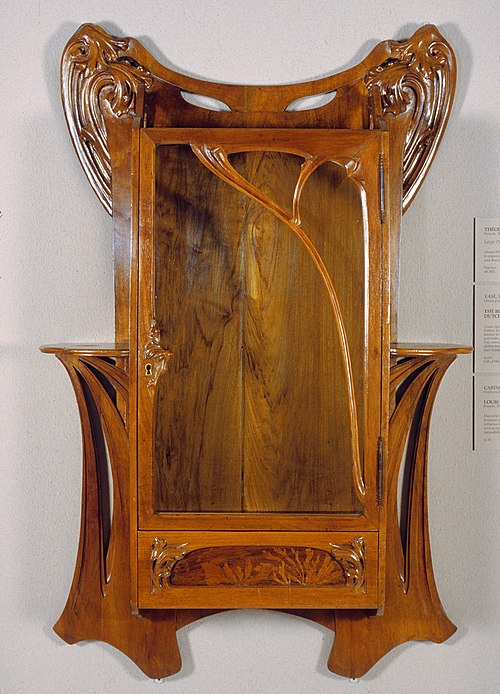
Louis Majorelle Wall Cabinet Walters 6587