On August 21, 1983, on the apron of what was then Manila International Airport, Benigno "Ninoy" Aquino Jr., a former Philippine senator, was assassinated with a gunshot to the head. Aquino, a longtime
Aquino in the 1980s


B-1836, the incident aircraft, taxiing at Hong Kong's Kai Tak International Airport on October 31, 1983, two months after the assassination.

The tarmac of Ninoy Aquino International Airport as seen from Terminal 1, with the plaque (bottom) marking the exact spot of the assassination.

Rolando D. Galman's grave at Manila Memorial Park – Sucat.
Corazon Aquino
Videos
María Corazón "Cory" Sumulong Cojuangco-Aquino was a Filipino politician who served as the 11th president of the Philippines, serving from 1986 to 1992. The first female president in Philippine histor
Assassination of Ninoy Aquino
…assassination is credited with transforming the isolated opposition to Marcos into a national crusade, and, in tandem, with thrusting Aquino's widow, Corazon Aquino, into the spotlight. In 1986, Marcos called a snap presidential election. Corazon Aquino was a candidate, and though she did not win, she became President…
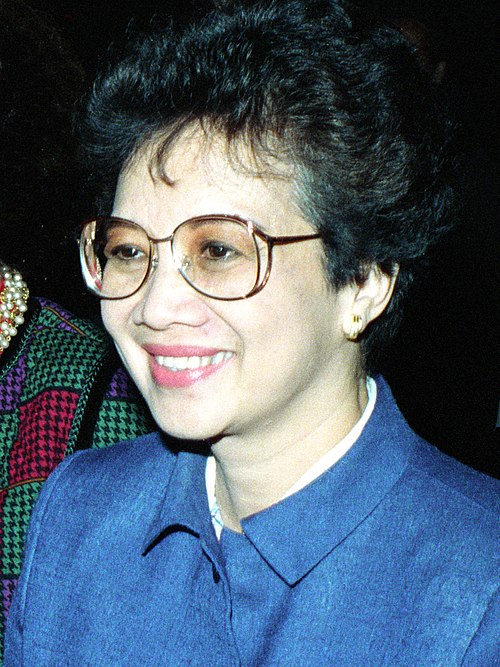
Aquino in 1986

Aquino takes the oath of office before Chief Justice Claudio Teehankee Sr. in Club Filipino, San Juan on February 25, 1986

Aquino during a ceremony honoring the United States Air Force

Aquino with U.S. Vice President Dan Quayle participate in the Veterans' Day Service at Arlington National Cemetery on November 10, 1989.