Astor Place Riot
Videos
The Astor Place Riot occurred on May 10, 1849, at the now-demolished Astor Opera House in Manhattan and left between 22 and 31 rioters dead, and more than 120 people injured. It was the deadliest to t

Rioters at the Astor Place Opera House on the night of the riot. In the foreground is the New York Militia firing upon rioters.
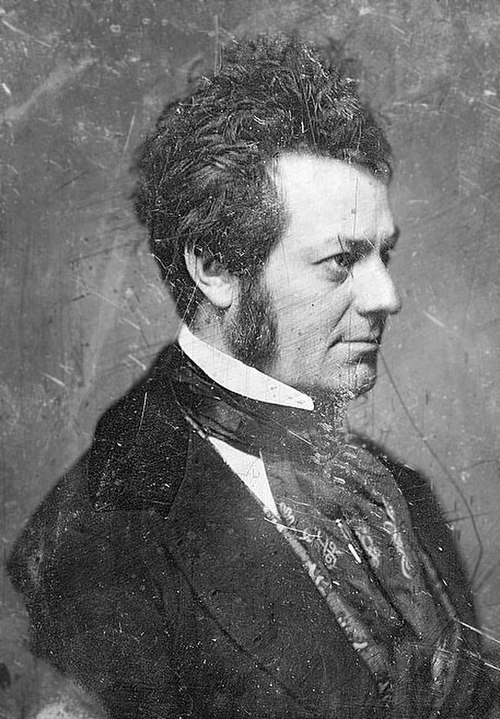
Edwin Forrest, daguerreotype by Mathew Brady

William Macready, portrait by John Jackson
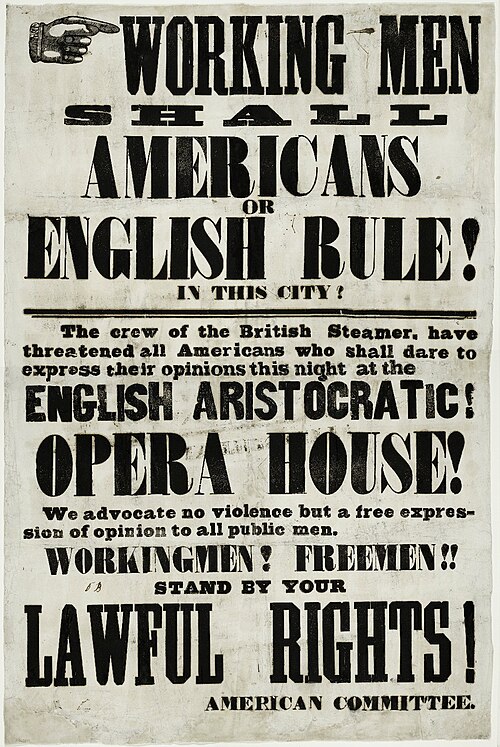
A handbill, produced by Ned Buntline and the American Committee (also known as the Order of United Americans) and handed out prior to, and complicit in instigating, the Astor Place riot.
Five Points, Manhattan
Videos
Five Points was a 19th-century neighborhood in Lower Manhattan, New York City. The neighborhood, partly built on low-lying land that had filled in the freshwater lake known as the Collect Pond, was ge
Astor Place Riot
…had made his debut at the Bowery Theatre, which had come to cater mostly to a working class audience, drawn largely from the violent, immigrant-heavy Five Points neighborhood of lower Manhattan a few blocks to the west. Forrest's muscular frame and impassioned delivery were deemed admirably "American" by his…

Lodgers in Bayard Street Tenement, Five Cents a Spot, 1889. Photo by Jacob Riis

A 1798 watercolor of Collect Pond. Bayard's Mount, a 110-foot (34 m) hillock, is in the left foreground. Prior to being levelled around 1811 it was located near the current intersection of Mott and Grand Streets.

Coulthard's Brewery (built c. 1792), converted to a tenement later known as "The Old Brewery" after the financial Panic of 1837 and resulting economic depression

Five Points streets intersection painted by George Catlin in 1827. Anthony Street veers off to the left, Orange Street is to the right, and Cross Street runs left to right in the foreground. The dilapidated tenement buildings to the left of Anthony Street were torn down in 1832 as far back as Little Water Street, and the vacant, triangular lot that was left became known as "Paradise Square".