Autogyro
Videos
An autogyro, gyroplane or gyrocopter, is a class of rotorcraft that uses an unpowered rotor in free autorotation to develop lift. A gyroplane "means a rotorcraft whose rotors are not engine-driven, ex

The AutoGyro Calidus, a modern, closed-cabin, pusher-propeller autogyro in flight

The rotor head, pre-rotator shaft, and Subaru engine configuration on a VPM M-16 autogyro

Russian Gyroplanes Gyros-2 Smartflier

Montgomerie Merlin single-seat autogyro
The 39 Steps (1935 film)
Videos
The 39 Steps is a 1935 British spy thriller film directed by Alfred Hitchcock, starring Robert Donat and Madeleine Carroll. It is loosely based on the 1915 novel The Thirty-Nine Steps by John Buchan.
Autogyro
…In the 1934 film It Happened One Night, King Westley arrives for his wedding by flying an autogyro. The 1935 film The 39 Steps, directed by Alfred Hitchcock, has a chase scene involving an autogyro. The 1967 James Bond film You Only Live Twice includes an aerial chase sequence…
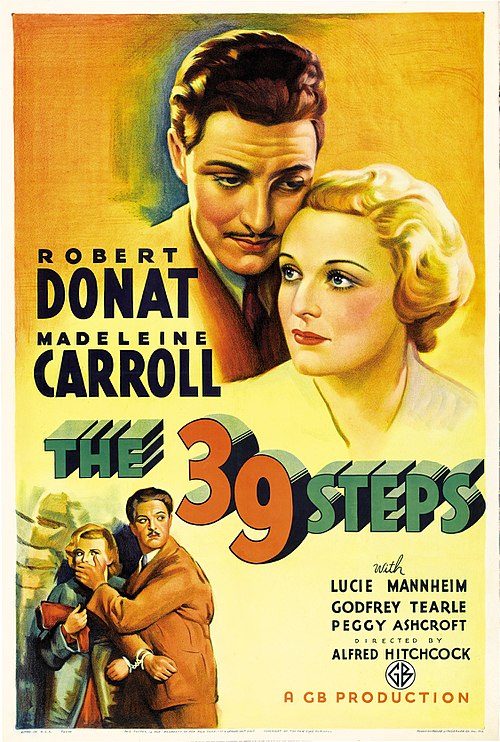
Theatrical release poster

Forth Bridge in 2007