Avian clutch size
Videos
Clutch size refers to the number of eggs laid in a single brood by a nesting pair of birds. The numbers laid by a particular species in a given location are usually well defined by evolutionary trade-
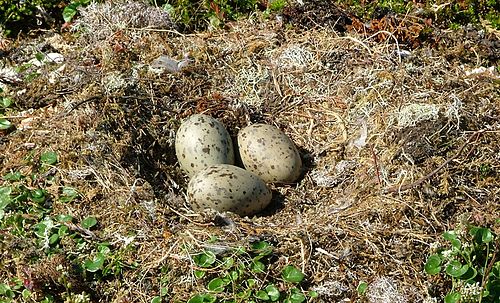
Great Black-backed Gull (Larus marinus), small clutch.

Red-shafted Northern Flicker: female (left), male (right).

Pied Flycatcher chicks in Finland.
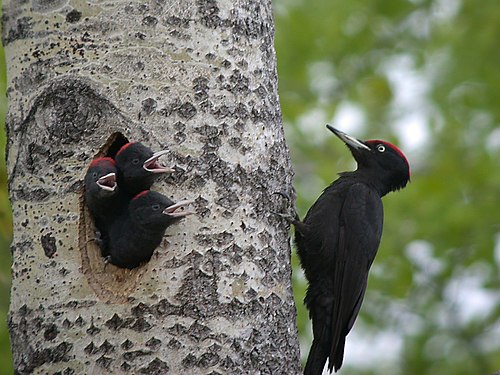
Woodpeckers are capable of excavating their own cavity nests.
Lack's principle
Videos
Lack's principle, proposed by the British ornithologist David Lack in 1954, states that "the clutch size of each species of bird has been adapted by natural selection to correspond with the largest nu
Avian clutch size
…that daylight had the most influence on clutch size. The study found little evidence for the direct proportionality between clutch size and latitude. Lack's principle…

Birds lay only as many eggs as they will be able to provide for.

If there are too many mouths to feed, fewer young will survive, reducing the parents' reproductive fitness.