Baal Shem Tov
Videos
Israel ben Eliezer, known as the Baal Shem Tov or BeShT, was a Jewish mystic and healer regarded as the founder of Hasidic Judaism. A baal shem tov is a "Master of the Good Name". The term has also be
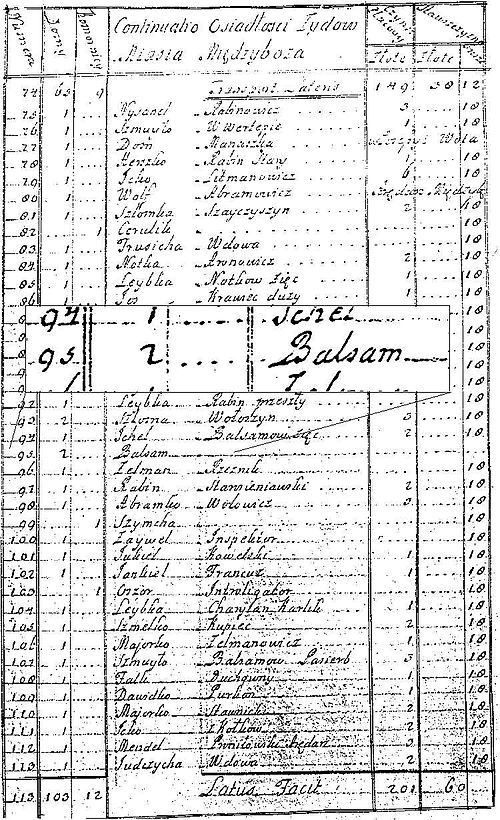
1758 Polish tax census of Medzhybizh showing "Balsam" in house #95

Monument to the Baal Shem Tov in Medzhybizh (before restoration in 2006–2008), inscribed רבי ישראל בעל שם טוב

The old synagogue of Medzhybizh (c. 1915). This building, which was never used by Israel (he preferred an alternate minyan), burned during World War II. Today a replica attracts tourists to Medzhybizh under the name "Baal Shem Tov Shul". A second replica opened in 2022 as a community synagogue in Wesley Hills, NY.

An 18th-century Kabbalistic siddur in the Chabad library. Chabad claims that Israel used this siddur.
Baal Shem
Videos
A Baal Shem was a historical Jewish practitioner of Practical Kabbalah, folk healer, and thaumaturge. Employing various methods, Baalei Shem are claimed to heal, enact miracles, perform exorcisms, tre
Baal Shem Tov
…one able to work miracles using a secret name of God. Other sources explain his sobriquet as arising from a reputation of being a saintly, or superior, Baal Shem ('miracle-worker'); hence, he was given the nickname Baal Shem Tov (the "good Baal Shem"). Biographical information about the Baal Shem Tov comes from…

A portrait of Hayyim Samuel Jacob Falk, the 'Baal Shem of London'.

A Jewish amulet with various Divine Names, attributed to the post-Baalei Shem, Hasidic mystical leader Moshe Teitelbaum (1759–1841)

Signpost for the grave of Sekl Loeb Wormser (1768–1847), Baal Shem of Michelstadt, Germany