Baltic Way
Videos
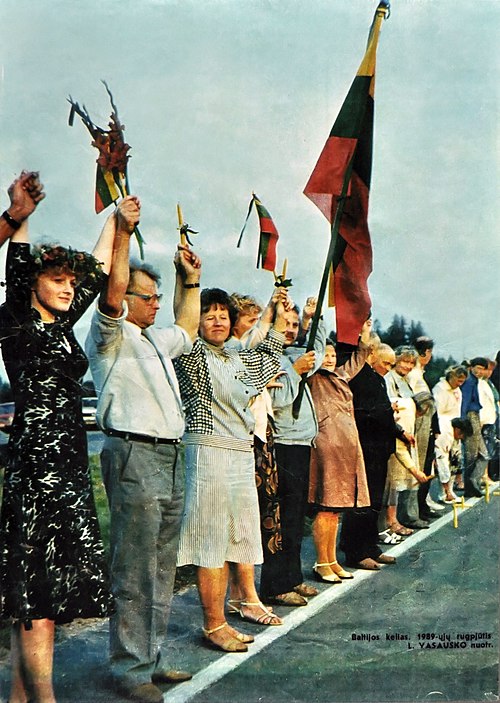
The Baltic Way or Baltic Chain was a peaceful political demonstration that occurred on 23 August 1989. Approximately two million people joined their hands to form a human chain spanning 675 kilometres
The Baltic Way: The human chain connecting the three Baltic capitals – Tallinn, Riga and Vilnius.

The 23 August 1939 Molotov–Ribbentrop Pact divided "the Baltic States (Finland, Estonia, Latvia, Lithuania)" into German and Soviet "spheres of influence" (German copy)

Poster denouncing the Molotov–Ribbentrop Pact

Diagram assigning each city and town a stretch of the road to cover
Singing Revolution
Videos
The Singing Revolution was a series of events from 1987 to 1991 that led to the restoration of independence of the three Soviet-occupied Baltic countries of Estonia, Latvia, and Lithuania at the end o
Baltic Way
…chain helped to publicise the Baltic cause around the world and symbolised solidarity among the Baltic peoples. The positive image of the non-violent Singing Revolution rapidly spread among the Western media. The activists, including Vytautas Landsbergis, utilized the increased exposure to position the debate over…

Leaders of the Supreme Council of Lithuania on 11 March 1990

Baltic Way participants between Cēsis and Valmiera

Participants near Ķekava

The Barricades in Riga in 1991