Bangladesh Liberation War
Videos
The Bangladesh Liberation War, also known as the Bangladesh War of Independence, was an armed conflict sparked by the rise of the Bengali nationalist and self-determination movement in East Pakistan,

Clockwise from top left: Martyred Intellectuals Memorial; Bangladesh Forces howitzer; A. A. K. Niazi signs the Pakistani Instrument of Surrender to the joint forces in the presence of Jagjit Singh Aurora; and the PNS Ghazi

Language movement memorial

Sheikh Mujibur Rahman, the leader of East Pakistan, and later Bangladesh
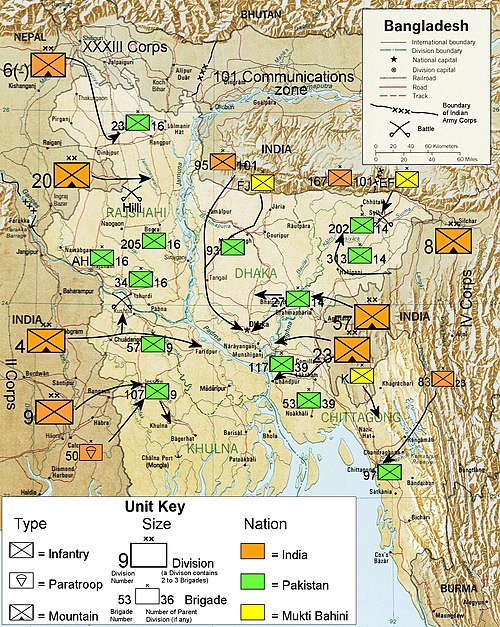
Illustration showing military units and troop movements during the war
Bangladesh genocide
Videos
The Bangladesh genocide was the ethnic cleansing of Bengalis residing in East Pakistan during the Bangladesh Liberation War, perpetrated by the Pakistan Army and the Razakars militia. It began on 25 M
Bangladesh Liberation War
…in West Pakistan—under the orders of Yahya Khan—launched Operation Searchlight against East Pakistanis on the night of 25 March 1971, initiating the Bangladesh genocide. In response to the violence, members of the Mukti Bahini—a guerrilla resistance movement formed by Bengali military, paramilitary and civilians—launched…

Corpses of Bengali nationalist intellectuals killed in Dhaka in December 1971, photographed by Rashid Talukdar

Human remains and war materiel from 1971 genocide in Liberation War Museum

Pile of bones of those killed in the Bangladesh Genocide

President of Pakistan Yahya Khan with United States President Richard Nixon, 1970.