Basiliscus
Videos
Basiliscus was Eastern Roman emperor from 9 January 475 to August 476. He became magister militum per Thracias in 464, under his brother-in-law, Emperor Leo I. Basiliscus commanded the army for an inv

Solidus of Basiliscus, marked: d·n· Basiliscus p·p· aug·
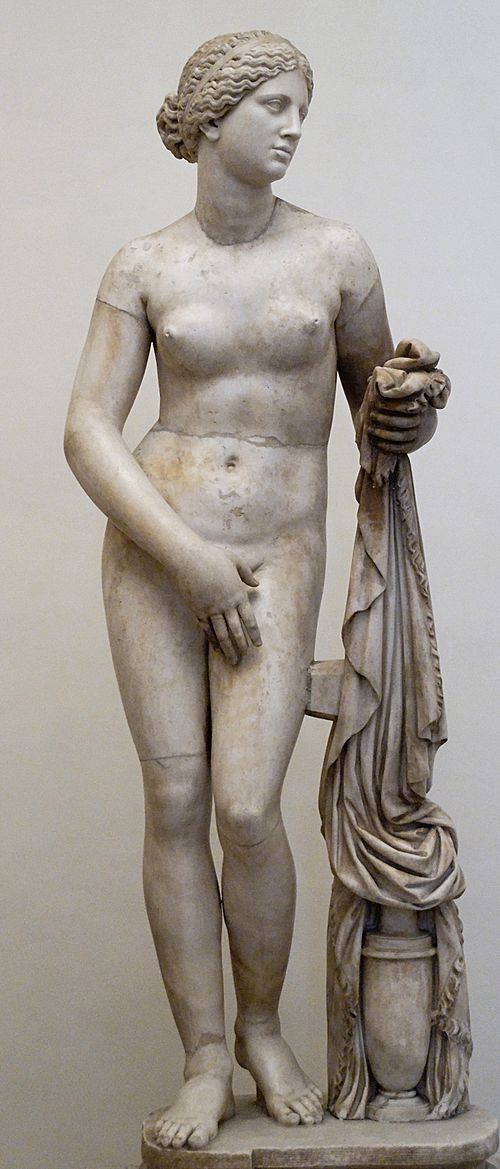
A copy of the Aphrodite of Knidos, whose original was destroyed in the fire of 475/476
Marcus (son of Basiliscus)
Videos
Marcus was the son of the Eastern Roman general and usurper Basiliscus and Zenonis. He was acclaimed caesar in 475 and later promoted to augustus, ruling as junior co-emperor to his father. When Zeno
Basiliscus
…the total lack of contemporary sources mentioning his ethnicity or relationship to Odoacer. Basiliscus married Zenonis, and with her produced a son, Marcus. Zenonis's origins are unknown, but she may have been a miaphysite, as some authors credit her for pushing Basiliscus's religious policies. Basiliscus…

Solidus of Basiliscus with the legend dn basilisci et marc p avg