Baths of Agrippa
Videos
The Baths of Agrippa was a structure of ancient Rome, Italy, built by Marcus Vipsanius Agrippa. It was the first of the great thermae constructed in the city, and also the first public bath.
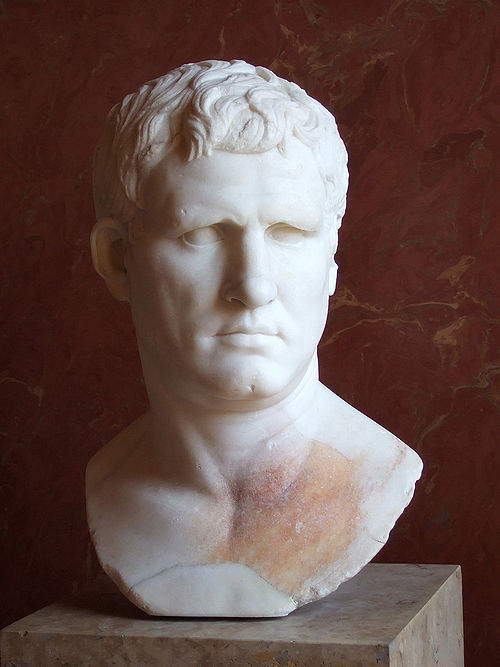
Marble portrait head of Marcus Vipsanius Agrippa, currently in the Louvre
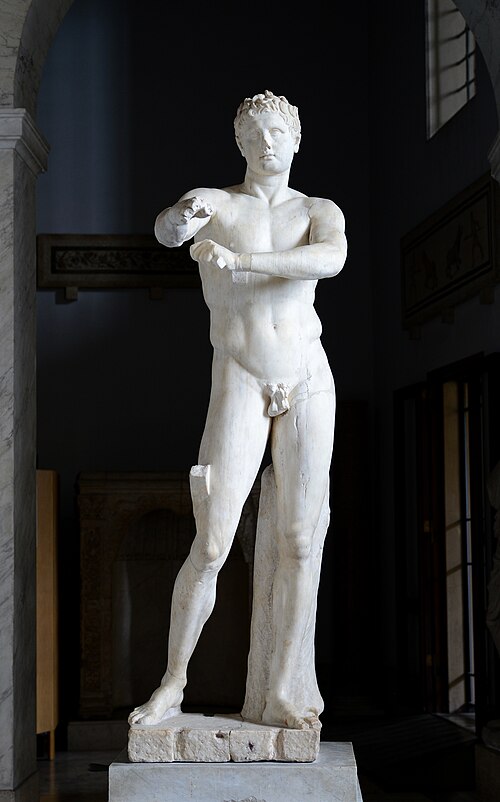
Marble copy of the Apoxyomenos of Lysippus (Pius Clementine Museum, Vatican)

The later Baths of Trajan showing the frigidarium (N), the tepidarium (F), and the caldarium (C), a form which became popular in the late Republic to early Principate. Whether or not the Baths of Agrippa were symmetrical remains unknown due to the scant archaeological evidence which has survived.

Route of the Aqua Virgo to Rome.
Aqua Virgo
Videos
The Aqua Virgo was one of the eleven Roman aqueducts that supplied the city of ancient Rome. It was completed in 19 BC by Marcus Agrippa, during the reign of the emperor Augustus and was built mainly
Baths of Agrippa
…In the bath's first form, completed in 25 BC, it was a hot-air room also known as a "laconian sudatorium or gymnasium". With the completion of the Aqua Virgo in 19 BC, the baths were supplied with water and with the addition of a large lake and canal (Stagnum Agrippae). Between the construction and Agrippa's…

The only remains above ground, in via del Nazzareno

60 metres (200 ft) stretch of the aqueduct arches, recently found inside the Rinascente shopping complex

Modern day windlass used for an Anchor