Battle of Agincourt
Videos
The Battle of Agincourt was an English victory in the Hundred Years' War. It took place on 25 October 1415 near Azincourt, in northern France. The unexpected victory of the vastly outnumbered English


Monumental brass of an English knight wearing armour at the time of Agincourt (Sir Maurice Russell (d. 1416), St Peter's Church, Dyrham, Gloucestershire)
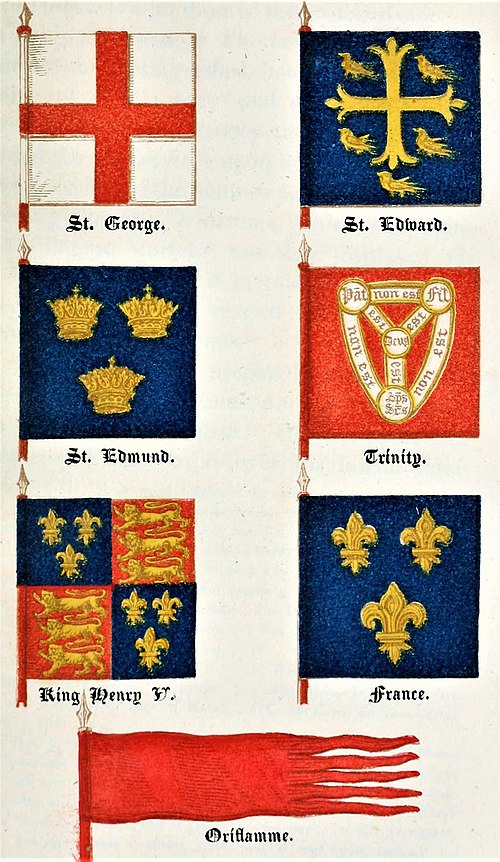
1833 reconstruction of the banners flown by the armies at Agincourt

Miniature depicting the battle from Vigiles du roi Charles VII
Hundred Years' War
Videos
The Hundred Years' War was a series of conflicts between the kingdoms of England and France and a civil war in France during the late Middle Ages. It emerged from feudal disputes over the Duchy of Aqu
Battle of Agincourt
…The Battle of Agincourt ( AJ-in-kor(t); French: Azincourt ) was an English victory in the Hundred Years' War (1337–1453). It took place on 25 October 1415 (Saint Crispin's Day) near Azincourt, in northern France. The unexpected victory of the vastly outnumbered…
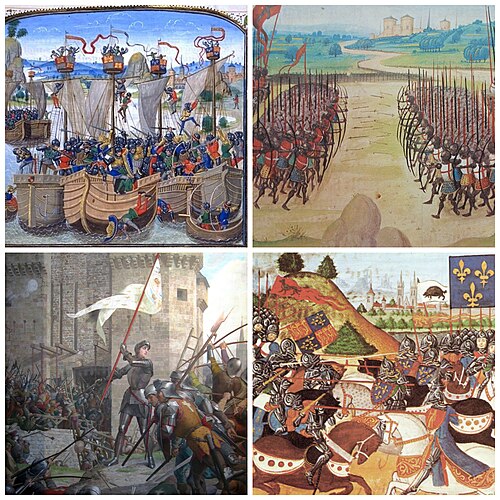

Bataille de la Rochelle

Patay

Lenepveu, Jeanne d'Arc au siège d'Orléans