Battle of Bita Paka
Videos
The Battle of Bita Paka was fought south of Kabakaul, on the island of New Britain, and was a part of the invasion and subsequent occupation of German New Guinea by the Australian Naval and Military Expeditionary Force (AN&MEF) shortly after the outbreak of the First World War. Similar to New Zealand's operation against German Samoa in August, the main target of the operation was a strategically important wireless station—one of several used by the German East Asia Squadron—which the Australians believed to be located in the area. The powerful German naval fleet threatened British interests and its elimination was an early priority of the British and Australian governments during the war.


Vicinity of Rabaul, Blanche Bay and Bita Paka on the Gazelle Peninsula, New Britain

A platoon of German reservists, shortly before the arrival of the AN&MEF
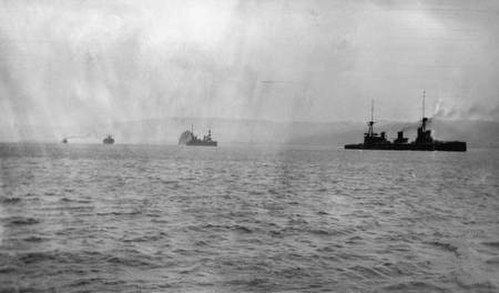
The Australian Squadron entering Simpson Harbour, September 1914.
Major General William Holmes was a senior Australian Army officer during the First World War. He was mortally wounded by a German artillery shell while surveying the ground won at the Battle of Messines.
