Battle of Britain
Videos
The Battle of Britain was a military campaign of the Second World War, in which the Royal Air Force and the Fleet Air Arm of the Royal Navy defended the United Kingdom against large-scale attacks by N

Spitfire and He 111 during Battle of Britain 1940
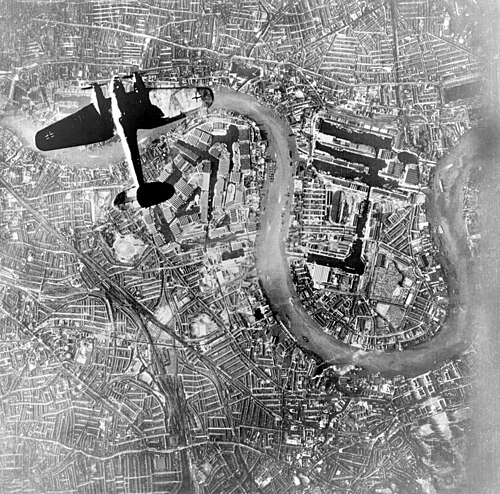
Heinkel He 111 over Wapping, East London

Heinkel He 111 during the Battle of Britain

RAF station under attack during Battle of Britain 1940
Operation Sea Lion
Videos
Operation Sea Lion, also written as Operation Sealion, was Nazi Germany's code name for their planned invasion of the United Kingdom. It was to have taken place during the Battle of Britain, nine mont
Battle of Britain
…mainly targeting coastal-shipping convoys, as well as ports and shipping centres such as Portsmouth. On 16 July, Hitler ordered the preparation of Operation Sea Lion as a potential amphibious and airborne assault on Britain, to follow once the Luftwaffe had air superiority over the Channel. On 1 August, the Luftwaffe…

British soldiers in France in 1939

Winston Churchill visiting bomb-damaged areas of the East End of London, 8 September 1940

The Channel (Der Kanal), D.66 Kriegsmarine nautical chart, 1943

Invasion barges assembled at the German port of Wilhelmshaven.