Battle of Hastings
Videos
The Battle of Hastings was fought on 14 October 1066 between the Norman-French army of William, Duke of Normandy, and an English army under the Anglo-Saxon King Harold Godwinson, beginning the Norman

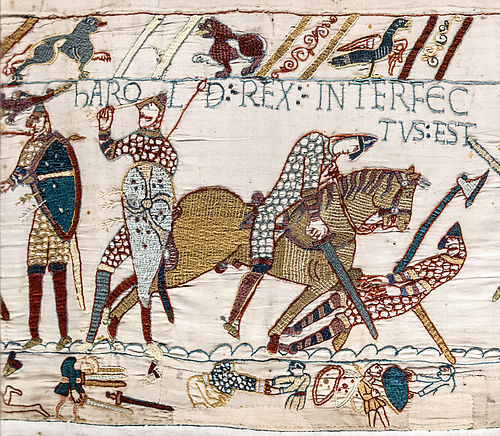
Harold rex interfectus est: "King Harold is killed". Scene from the Bayeux Tapestry depicting the Battle of Hastings and the death of Harold.

The location of the Battle of Stamford Bridge
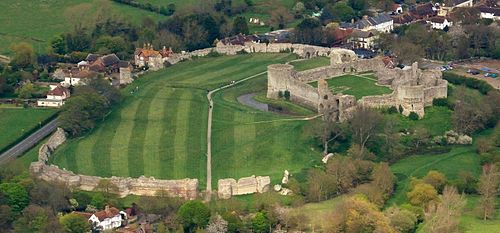
On landing at Pevensey, William established a castle within the ruins of the Roman fort. While the outermost walls date from the Roman period, the surviving buildings of the inner bailey post-date William.

Norman knights and archers at the Battle of Hastings, as depicted in the Bayeux Tapestry
Harold Godwinson
Videos
Harold Godwinson, also called Harold II, was the last crowned Anglo-Saxon king of England. Harold reigned from 6 January 1066 until his death at the Battle of Hastings on 14 October 1066, the decisive
Battle of Hastings
…of Hastings was fought on 14 October 1066 between the Norman-French army of William, Duke of Normandy, and an English army under the Anglo-Saxon King Harold Godwinson, beginning the Norman Conquest of England. It took place approximately 7 mi (11 km) northwest of Hastings, close to the present-day town of Battle…


Harold Godwinson, from the Bayeux Tapestry

HAROLD SACRAMENTUM FECIT VVILLELMO DUCI ("Harold made an oath to Duke William"): the Bayeux Tapestry shows Harold touching two altars at Bayeux as the duke watches.

Coin of King Harold Godwinson

Gyrth and his brother's death at the Battle of Hastings, scene 52 of the Bayeux Tapestry. HIC CECIDERUNT LEVVINE ET GYRÐ FRATRES HAROLDI REGIS (Here have fallen dead Leofwine and Gyrth, brothers of King Harold)