Battle of Kororāreka
Videos
The Battle of Kororāreka, or the Burning of Kororāreka, on 11 March 1845, was an engagement of the Flagstaff War in New Zealand. Following the establishment of British control of the islands, war brok
Hōne Heke removing the British colors from Flagstaff Hill in Kororāreka


Wood fragments said to be from the flagstaff cut down by Hōne Heke. Auckland War Memorial Museum

Russell (Kororāreka) from the bay, 24 January 2018
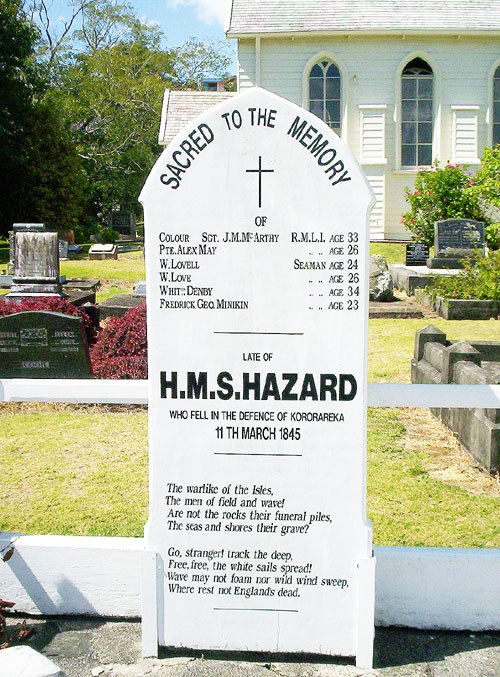
A memorial in Russell for the men of HMS Hazard who died in the battle
Christ Church, Russell
Videos
Christ Church is New Zealand's oldest surviving church, located in the village of Russell.
Battle of Kororāreka
…Pou Matavia Pass Hirawanu Kereopa About 31 unidentified Military Royal Navy James McCarthy. Colour-Sergeant, Royal Marines, HMS Hazard Matavia Pass Christ Church, Kororāreka, 11 March Alexander May. Private, Royal Marines, HMS Hazard Matavia Pass Christ Church, Kororāreka, 11 March Whitaker Denby. Seaman, HMS…

Christ Church in Russell, with its historic graveyard, in 2001

Holes made by musket balls during the Battle of Kororāreka

Interior of Christ Church