Battle of New Orleans
Videos
The Battle of New Orleans was fought on January 8, 1815, between the British Army under Major General Sir Edward Pakenham and the United States Army under Brevet Major General Andrew Jackson, roughly

The battle as painted by Jean Hyacinthe de Laclotte, a member of the Louisiana Militia, based on his sketches made at the scene
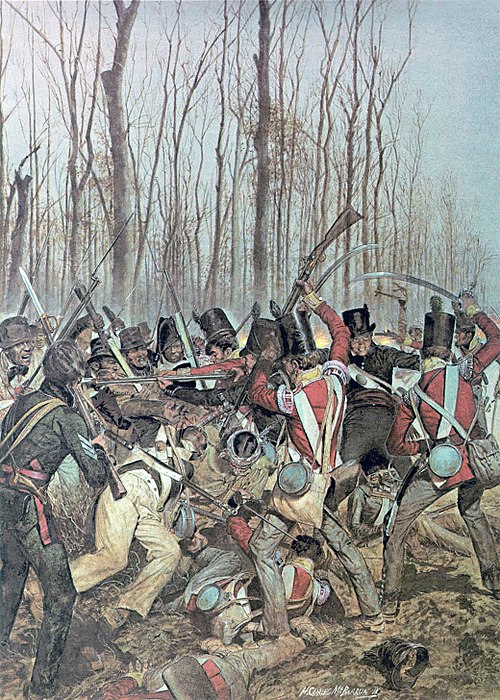
H. Charles McBarron, Free Men of Colour and Choctaw Indian Volunteers at New Orleans, Louisiana (1982)

Battery 4, in the middle of Line Jackson, contained the biggest American artillery gun, a naval 32-pounder that was transferred from the USS Carolina before she was sunk by the British.

The Death of Pakenham at the Battle of New Orleans by F. O. C. Darley shows the death of British Maj. Gen. Sir Edward Pakenham on January 8, 1815
Jean Lafitte
Videos
Jean Lafitte was a French pirate, privateer, and slave trader who operated in the Gulf of Mexico in the early 19th century. He and his older brother Pierre spelled their last name Laffite, but English
Battle of New Orleans
…was sculpted by Sir Richard Westmacott. The Buccaneer, a 1938 American adventure film made by Cecil B. DeMille starring Fredric March, was based on Jean Lafitte and the Battle of New Orleans during the War of 1812. The Buccaneer, a 1958 pirate-war film starring Yul Brynner as Jean Lafitte and Charlton Heston…

Presumed portrait of Jean Lafitte
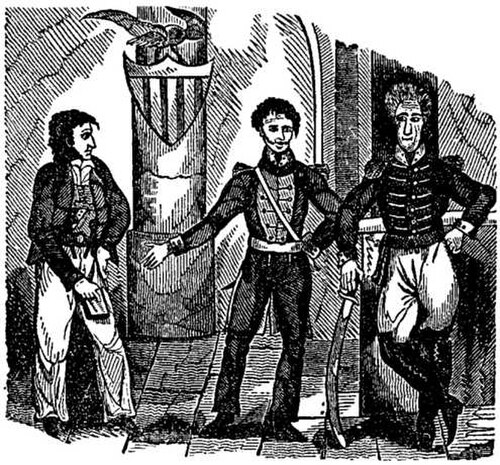
An 1837 woodcut of Lafitte, Governor W.C.C. Claiborne, and General Andrew Jackson during the War of 1812
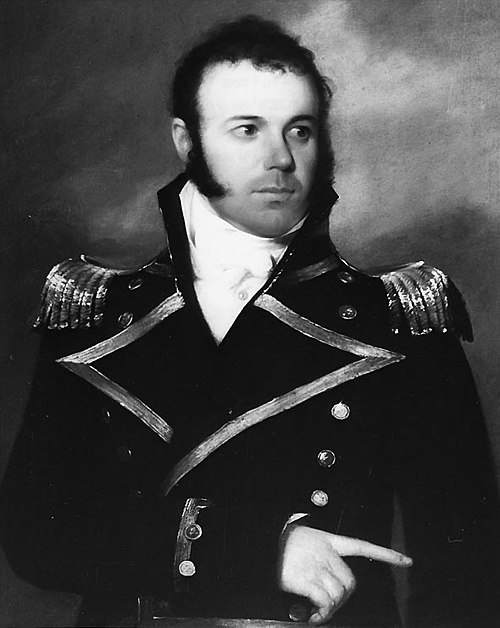
US Commodore Daniel Patterson commanded an offensive force against Lafitte and his men at Barataria, 1814.

A rumor claimed that Lafitte rescued French Emperor Napoleon (pictured) from exile on the isolated island of Saint Helena and both of them ended their days in Louisiana. No evidence supports it.