Battle of Schliengen
Videos
At the Battle of Schliengen, the French Army of the Rhine and Moselle under the command of Jean-Victor Moreau and the Austrian army under the command of Archduke Charles of Austria both claimed victories. The village of Schliengen lies in the present-day Kreis Lörrach close to the border of present-day Baden-Württemberg (Germany), the Haut-Rhin (France), and the Canton of Basel-Stadt (Switzerland).

Present-day view of the battlefield
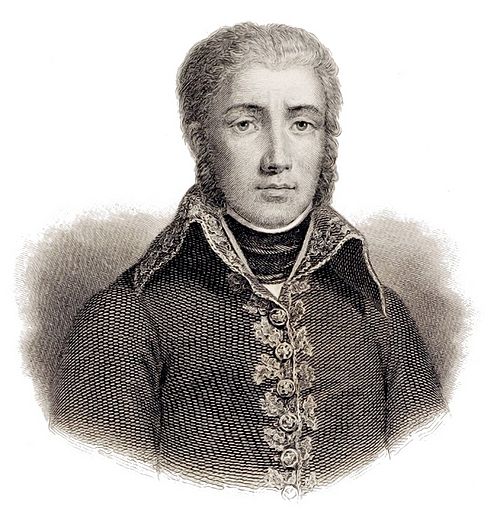
An ardent Republican, Moreau's skillful assault pushed his opponent's army far eastward into the south German states. His and Jourdan's failure to coordinate their movements led to their strategic withdrawal from the German states.

Brother of the Holy Roman Emperor, Archduke Charles held overall command of Habsburg forces in the south German states. By August, he linked his army with Wartensleben's, and was able to push his opponents Jourdan and Moreau back to the Rhine river.

After uniting with Moreau's main army at Freiburg, Ferino withdrew along the High Rhine, to guard the southern flank of Moreau's army. Their united force defended French positions in the southwestern corner of Germany, along the Rhine corridor and eventually covered Moreau's withdrawal to France.
Charles Ferdinand d'Artois, Duke of Berry was the third child and younger son of Charles X, King of France, by his wife Maria Theresa of Savoy. In 1820 he was assassinated at the Paris Opera by Louis Pierre Louvel, a Bonapartist. In June 1832, two years after the overthrow of Charles X, an unsuccessful royalist insurrection in the Vendée was led by Charles Ferdinand's widow, Marie-Caroline, in an attempt to restore their son Henri, Comte de Chambord to the French throne.


Charles Ferdinand (left) with his older brother Louis Antoine and sister Sophie, 1781.

Assassination of Charles Ferdinand, Duke of Berry, while departing a Parisian opera house at night.

Death of Charles Ferdinand, Duke of Berry, 13 february 1820.