Battle of the Somme
Videos
The Battle of the Somme, also known as the Somme offensive, was a battle of the First World War fought by the armies of the British Empire and the French Republic against the German Empire. It took pl

The Western Front (January 1915 – December 1916)

Troops of the British Indian Army at Battle of the Somme.

Men of the 10th (Service) Battalion, East Yorkshire Regiment of the 31st Division marching to the front line, 28 June 1916.
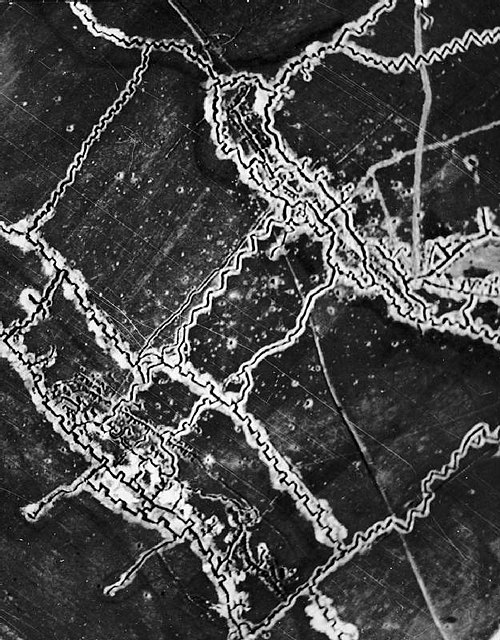
British aerial photograph of German trenches north of Thiepval, 10 May 1916, with the German forward lines to the lower left. The crenellated appearance of the trenches is due to the presence of traverses.
Battle of Verdun
Videos
The Battle of Verdun was fought from 21 February to 18 December 1916 on the Western Front in France. The battle was the longest of the First World War and took place on the hills north of Verdun. The
Battle of the Somme
…Somme offensive, supported on the northern flank by the Fourth Army of the British Expeditionary Force (BEF). When the Imperial German Army began the Battle of Verdun on the Meuse on 21 February 1916, French commanders diverted many of the divisions intended for the Somme and the "supporting" attack by the British…

Long Max mounted on its combined railway and firing platform.

Fort Douaumont before the battle (German aerial photograph)

Douaumont after the battle

German soldiers attack Le mort homme