Bede
Videos
Bede, OSB, also known as the Venerable Bede or Bede the Venerable, was an English Benedictine monk, author and scholar. He was one of the best known writers during the Early Middle Ages, and his most
The Venerable Bede writing. Detail from a 12th-century codex.


Stained glass at Gloucester Cathedral depicting Bede dictating to a scribe

Bede's tomb in the Galilee Chapel at the west end of Durham Cathedral

The Venerable Bede writing the Ecclesiastical History of the English People, from a 12th-century codex at Engelberg Abbey, Switzerland
Doctor of the Church
Videos
Doctor of the Church, also referred to as Doctor of the Universal Church, is a title given by the Catholic Church to saints recognized as having made a significant contribution to theology or doctrine
Bede
…shrine was demolished during the English Reformation, but Bede was reburied in the cathedral. In 1899, Pope Leo XIII canonised him and declared him a Doctor of the Church. He is the first native of Great Britain to achieve this designation. Almost everything that is known of Bede's life is contained in the last chapter…
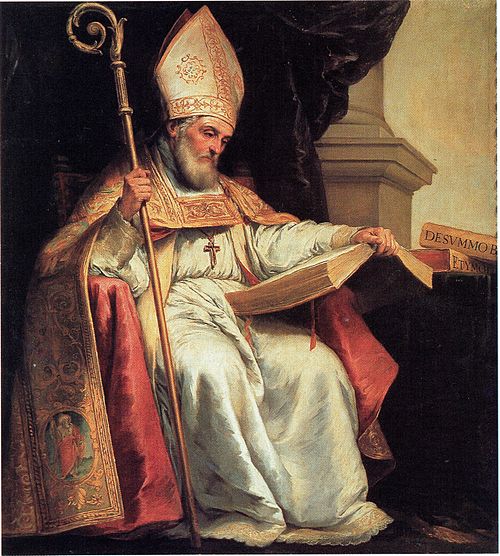
Isidore of Seville, a seventh-century Doctor of the Church, depicted by Murillo (c. 1628) with a book, which is a common iconographical attribute for a doctor

Hildegard von Bingen was a twelfth-century Doctor of the Church, depicted by Marshall with a book, the common iconographical attribute for a doctor

The Four Great Doctors of the Western Church were often depicted in art, here by Pier Francesco Sacchi, c. 1516. From the left: Saint Augustine, Pope Gregory I, Saint Jerome, and Saint Ambrose, with their attributes

Gregorythegreat