Belshazzar
Videos
Belshazzar was the son and crown prince of Nabonidus, the last king of the Neo-Babylonian Empire. Through his mother, he might have been a grandson of Nebuchadnezzar II, though this is not certain and

The Nabonidus Chronicle, an ancient Babylonian text which chronicles the reign of Belshazzar's father and also documents the period during which Belshazzar was regent in Babylon
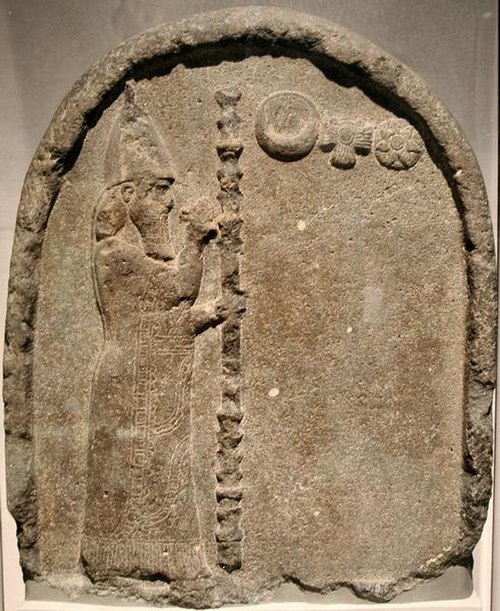
Stele depicting Nabonidus, Belshazzar's father

This clay cylinder records the restoration of Sin's ziggurat at Ur by Nabonidus, and also asks him to protect Nabonidus and his son, Belshazzar. From Ur, Iraq

This administrative document is dated to the "24th day of Kislimu in the 11th year of Nabonidus, king of Babylon". It mentions a slave of Bel-sharra-usur (Belshazzar), son of the king. Although Belshazzar is acting as a regent, the formal date shows that Nabonidus is still the reigning king. From Borsippa, Iraq
Nebuchadnezzar II
Videos
Nebuchadnezzar II, more correctly spelled Nebuchadrezzar II, meaning "Nabu, watch over my heir", was the second king of the Neo-Babylonian Empire, ruling from the death of his father Nabopolassar in 6
Belshazzar
…son and crown prince of Nabonidus (r. 556 – 539 BC), the last king of the Neo-Babylonian Empire. Through his mother, he might have been a grandson of Nebuchadnezzar II (r. 605 – 562 BC), though this is not certain and the claims to kinship with Nebuchadnezzar may have originated from royal propaganda. Belshazzar played…

A fired mudbrick from Babylon, stamped with the name and titles of Nebuchadnezzar

A preserved portion of the Eanna temple at Uruk. Nebuchadnezzar was the high priest of the Eanna temple from 626/625 BC to 617 BC.

The so-called "Chronicle of Nabopolassar". The cuneiform inscriptions on this clay tablet narrate the chronicle of the years 608-605 BC. After the fall of Nineveh, Naboplolassar vied with Egypt to control Assyria's western territories. His death stopped the campaign and sent his son Nebuchadnezzar II back to Babylon to claim the throne.

A clay cylinder of Nabopolassar, Nebuchadnezzar's father and predecessor, from Babylon