Belt (firearms)
Videos
An ammunition belt is a firearm device used to package and feed cartridges, typically for rapid-firing automatic weapons such as machine guns. Belt-fed systems minimize the proportional weight of the ammunition apparatus to the entire weapon system, and allow high rates of continuous fire without needing frequent magazine changes. The capacity of belts and associated belt containers is typically a function of weight and bulk, and their size is limited by caliber and the combined portability of the weapon and ammunition. Typical capacities for man-portable weapon systems range from 50 to 300 rounds of ammunition.

An M60 machine gun belt loaded with 7.62×51mm NATO cartridges, aboard a U.S. Navy patrol craft

8mm Lebel feed strip on an M1914 Hotchkiss gun.

An M27 disintegrating belt loaded with 5.56×45mm NATO M855 Ball and M856 tracer ammunition being fed into an M249 light machine gun

Method of joining German non-disintegrating metallic-link ammunition machine gun belts
DShK
Videos
The DShK 1938 is a Soviet heavy machine gun. The weapon may be vehicle mounted or used on a tripod or wheeled carriage as a heavy infantry machine gun. The DShK's name is derived from its original designer, Vasily Degtyaryov, and Georgi Shpagin, who later improved the cartridge feed mechanism. It is sometimes nicknamed Dushka in Russian-speaking countries, from the abbreviation.

A 1938 DShK at the Military Historical Museum of Artillery, Engineers and Signal Corps in St. Petersburg

A Romanian DShK chambered in 12.7×99mm NATO on display at Expomil 2005.
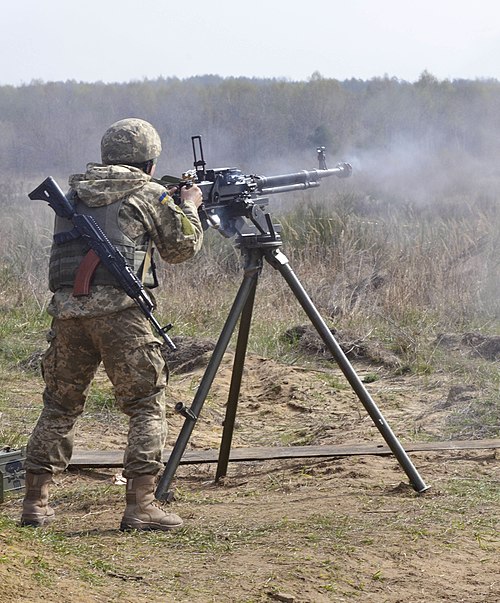
A soldier with the Ukrainian Land Forces fires a DShKM

DShKM TR-85M1