Benjamin Mazar
Videos
Benjamin Mazar was a pioneering Israeli historian, recognized as the "dean" of biblical archaeologists. He shared the national passion for the archaeology of Israel that also attracts considerable int
Benjamin Mazar in 1936, at Bet Shearim

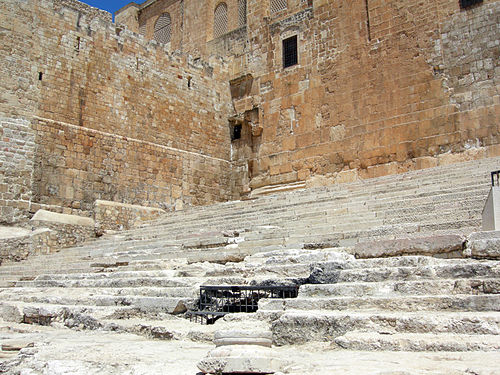
Remnants of the 1st century Stairs of Ascent, discovered by archaeologist Benjamin Mazar, to the entrance of the Temple courtyard. Pilgrims coming to offer sacrifices at the Temple would have entered and exited by this stairway.

Tomb of Himyarite, in Greek uncials
Yitzhak Ben-Zvi
Videos
Yitzhak Ben-Zvi was a historian, ethnologist, and Labor Zionist who was the second president of Israel from 1952 until his death in 1963. Ben-Zvi is Israel's longest-serving president.
Benjamin Mazar
…Mazar was the recipient of the 2009 Israel Prize for Archaeology. Benjamin Mazar is the brother-in-law of Israel's second and only three-term President, Yitzhak Ben Zvi. In 1968, Mazar was awarded the Israel Prize, for Jewish studies…

Ben-Zvi in 1952

Ben Zvi with Rachel Yanait in Istanbul, 1913

Editorial staff of Ha-Achdut, 1910. Right to left; seated – Yitzhak Ben-Zvi, David Ben-Gurion, Yosef Haim Brenner; standing – A. Reuveni, Ya'akov Zerubavel

Yitzhak Ben-Zvi (standing, second from right) at a meeting with Arab leaders at the King David Hotel, Jerusalem, 1933. Also pictured are Chaim Weizmann (sitting, second from left), Haim Arlosoroff (sitting, center), and Moshe Shertok (Sharett) (standing, right).