Berber calendar
Videos
The Berber calendar is the agricultural calendar traditionally used by Berbers. The calendar is utilized to regulate the seasonal agricultural works.
Seasons in North Africa: Atlas Mountains in January and April

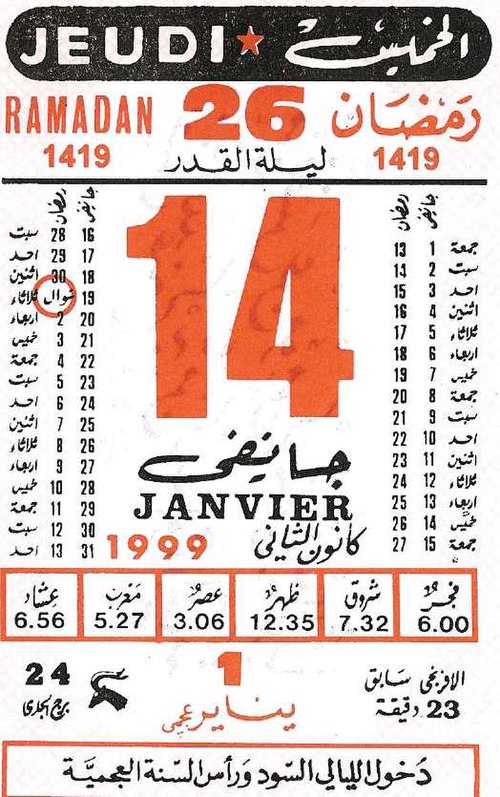
A page from a Tunisian calendar, showing the correspondence of 1 Yennayer ʿajmi (in red on bottom) with 14 January of the Gregorian calendar. The writing on the bottom signals that it is ʿajmi New Year's Day and that al-lyali al-sud ("the black nights") are beginning.

Photo taken on 31 December 2007 near Tafraout (Morocco), with the writings aseggas ameggaz ("good year") in Tifinagh and bonne année 2959 ("good year 2959") in French. Note the 1-year mistake, as 2959 corresponds to the Gregorian year 2009.
Yennayer
Videos
Yennayer is the first month of the Berber calendar. The first day of Yennayer corresponds to the first day of January in the Julian Calendar, which is shifted thirteen days compared to the Gregorian c
Berber calendar
…day in leap years is not usually added at the end of February, but at the end of the year. This means that the beginning of the year (the first day of yennayer) corresponds to the 14th day of January in the Gregorian calendar, which coincides with the offset accumulated during the centuries between astronomical…

Three Berber (Amazigh) calendars, all of them refer to the Shoshenq era (Gregorian + 950).