Blockade of Germany (1914–1919)
The Blockade of Germany, or the Blockade of Europe, occurred from 1914 to 1919. The prolonged naval blockade was conducted by the Allies during and after World War I in an effort to restrict the maritime supply of goods to the Central Powers, which included Germany, Austria-Hungary, and the Ottoman Empire. The blockade is considered one of the key elements in the eventual Allied victory in the war. In December 1918, the German Board of Public Health claimed that 763,000 German civilians had already died from starvation and disease caused by the blockade. An academic study done in 1928 put the death toll at 424,000. An additional 100,000 people may have died during the post-armistice continuation of the blockade in 1919.
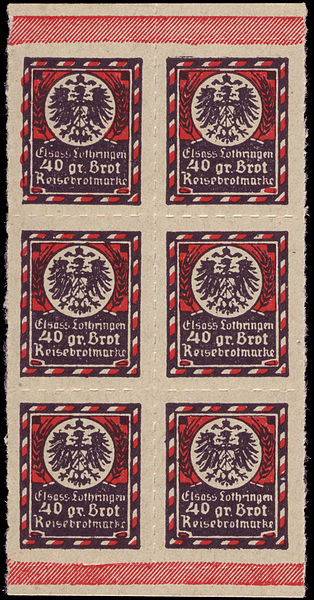
Bread rationing coupons issued in Alsace-Lorraine during World War I.
Starving child in 1919
A blockade is the act of actively preventing a country or region from receiving or sending out food, supplies, weapons, or communications, and sometimes people, by military force.
A blockade differs from an embargo or sanction, which are legal barriers to trade rather than physical barriers. It is also distinct from a siege in that a blockade is usually directed at an entire country or region, rather than a fortress or city and the objective may not always be to conquer the area.
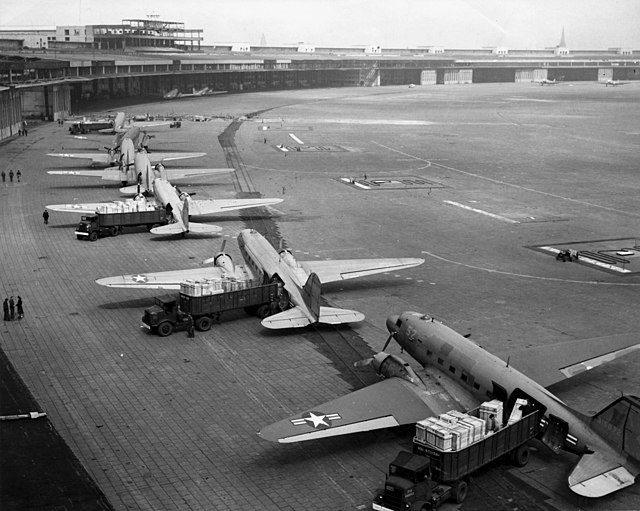
C47s unloading at Tempelhof Airport in Berlin, part of the airlift of supplies which broke the Soviet Union's 1948 land blockade of West Berlin
In World War II, German U-boats attempted to stop ships carrying food, supplies and matériel from reaching the United Kingdom, an example of a distant blockade.
President Kennedy and his advisors discuss the Cuban Missile Crisis. Part of the US response to Soviet missiles being placed in Cuba was a naval blockade of the island.
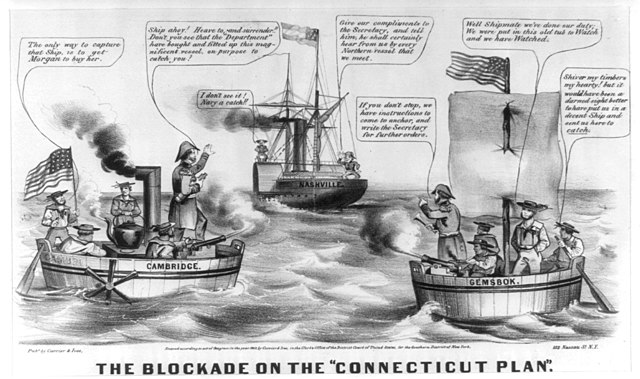
A Northern cartoonist ridicules the Union's initial attempts to blockade ports of the Confederacy in the American Civil War